How AI Democratizes Video Production for Creators

Stella writes SwipeStory guides about AI faceless video creation, short-form video strategy, creator tools, and automated publishing workflows.
AI democratizes video production by removing the technical and financial barriers that once made professional video a privilege of well-funded studios. Historically, producing a polished video required a camera crew, lighting rigs, editing software expertise, and a budget most independent creators simply did not have. AI changes that equation entirely. Tools that automate scripting, voiceover generation, and visual rendering now compress a multi-day production pipeline into minutes. Swipestory has already helped thousands of creators generate over 60,000 short videos this way, proving that professional output no longer depends on professional gear.
How AI democratizes video production: the core technologies
The shift in video creation comes down to a specific set of AI capabilities that replace what used to require specialized human labor. Generative AI techniques, including text-to-video synthesis, voice synthesis, and automated editing, now handle tasks that once demanded separate professionals for each role. A single text prompt can produce a script, a voiceover, a visual sequence, and a final edit in one pass. Modern AI tools generate videos from prompts, collapsing traditional multi-step pipelines into single-action processes.
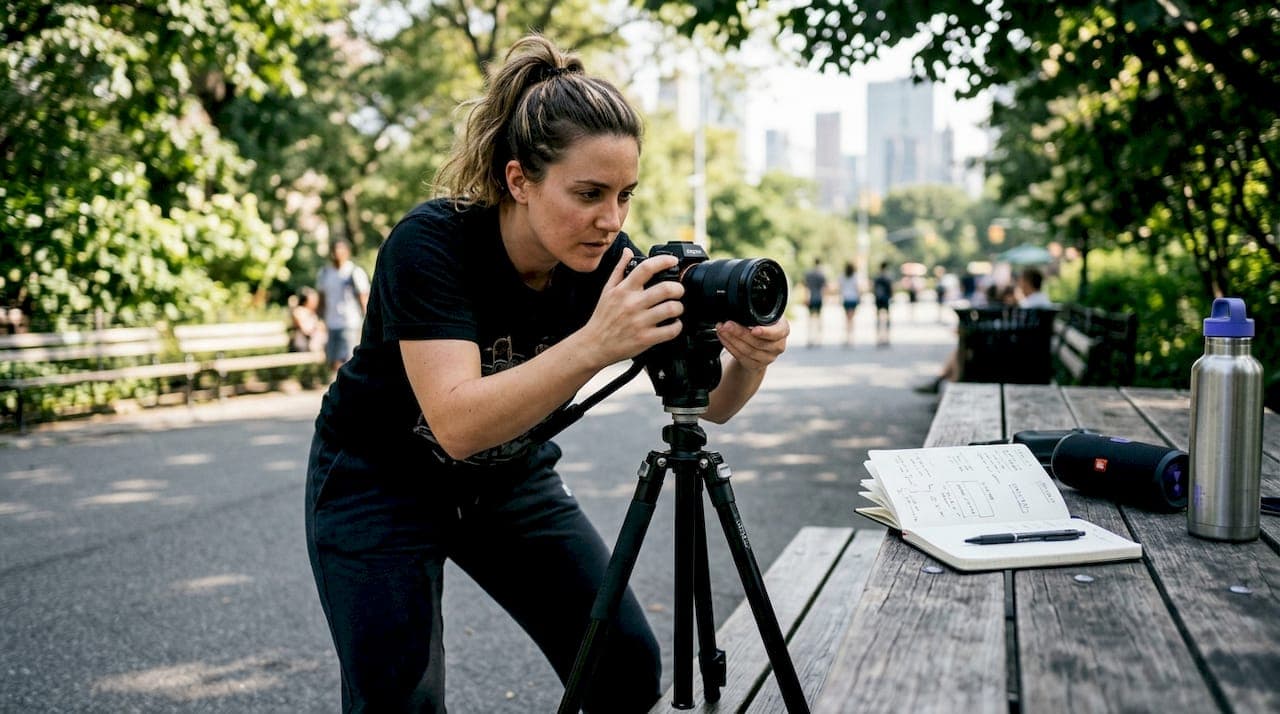
Multimodal AI models combine text, audio, and visual inputs simultaneously. This means a creator can describe a scene in plain language and receive a finished video clip with synchronized audio. Sound design, lighting simulation, and even cinematographic framing now happen through prompts rather than physical equipment. The creative bottleneck shifts from technical execution to the quality of the idea itself.
Real-time interactivity is the next frontier. Adobe MotionStream enables real-time cursor and slider controls that let creators manipulate objects and camera angles within live video renderings. That kind of interactive feedback loop was previously only possible in expensive post-production suites. It signals that AI video tools are moving from batch processing toward live, responsive creative environments.
- Text-to-video generation: Converts written prompts directly into video clips with matched visuals and pacing.
- Voice synthesis: Produces natural-sounding narration without a recording studio or voice talent.
- Automated editing: Cuts, sequences, and formats footage based on content type and platform requirements.
- Real-time controls: Tools like Adobe MotionStream allow live manipulation of video elements during rendering.
- Multimodal processing: Combines text, image, and audio inputs to produce cohesive finished videos.
Pro Tip: Write your video prompt the way you would brief a director. Include the tone, the audience, the key message, and the desired length. The more specific your input, the more usable your AI output.
How does AI reduce costs and speed up video production?
Traditional video production carries costs that most independent creators and small marketing teams cannot absorb. Crew fees, location rentals, equipment hire, and post-production editing hours add up fast. AI video production reduces costs by up to 90% by eliminating those line items entirely. That figure is not a rounding error. It means a video that once cost $10,000 to produce can now cost $1,000 or less.
Speed follows cost. Done-for-you AI video services deliver finished videos in 3–10 business days, including revision rounds. Traditional production schedules routinely run four to eight weeks when pre-production, shooting days, and editing are factored in. The gap between concept and published content shrinks from weeks to days.
Iteration speed matters as much as initial delivery time. With AI, a creator can request five variations of the same video in the time it would take a traditional editor to finish one. Each variation can target a different audience segment, tone, or platform format. That flexibility is genuinely new.
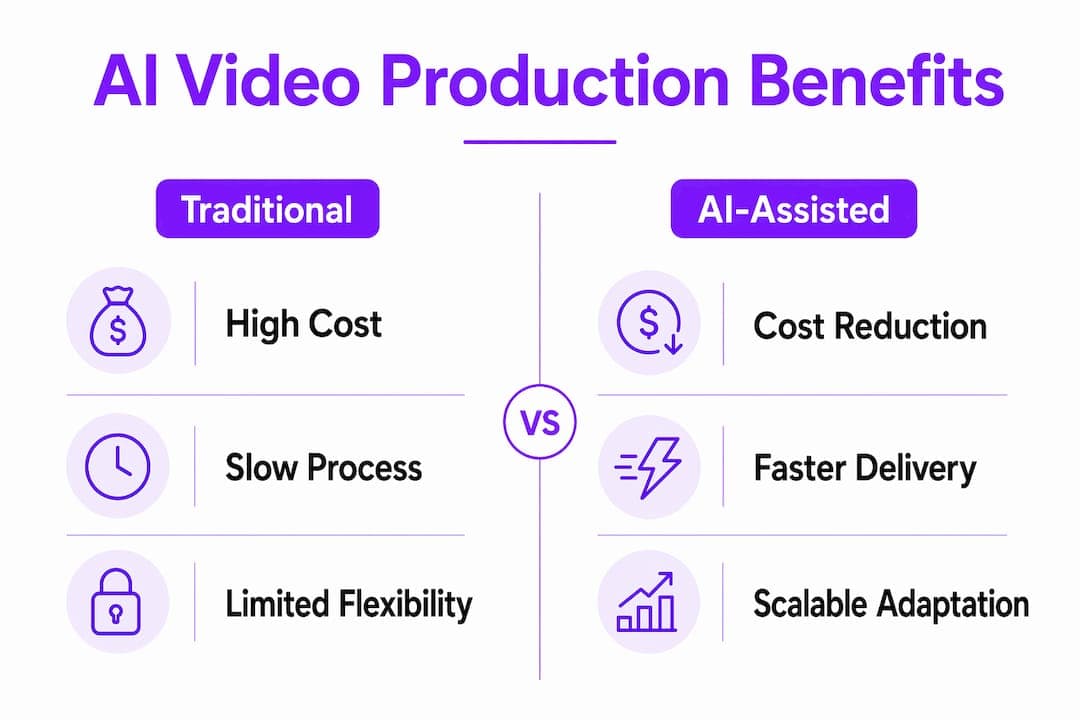
| Production factor | Traditional approach | AI-assisted approach |
|---|---|---|
| Cost range | High (crew, gear, location) | Up to 90% lower |
| Delivery time | 4–8 weeks typical | 3–10 business days |
| Revision cycles | Limited by budget | Multiple rounds included |
| Platform adaptation | Requires separate edits | Single source, multiple formats |
AI-generated videos adapt easily for multiple platforms, letting creators produce consistent campaigns formatted for TikTok, Instagram Reels, and YouTube Shorts from a single source file. That multi-format output eliminates the need to reshoot or re-edit for each channel.
What practical workflows integrate AI video tools effectively?
The most effective AI video workflows do not replace human creativity. They relocate it. AI moves human creativity upstream toward taste, emotional intelligence, and curation rather than technical execution. A creator's job becomes defining the vision, selecting the best AI outputs, and refining the message. The system handles the production mechanics.
Here is a practical workflow that content creators and marketers can adopt immediately:
- Define the concept clearly. Write a detailed brief covering audience, message, tone, and call to action before touching any tool.
- Generate a script with AI. Use a script-to-video tool to convert your brief into a structured script and initial video draft.
- Review and curate outputs. Select the best AI-generated visuals, voiceover takes, and pacing options. This is where human judgment adds the most value.
- Apply brand governance. Check the output against brand color, font, and tone standards before publishing. Successful AI video adoption at scale depends on integrating AI generation with governance and brand standards.
- Export for each platform. Use multi-format export to produce platform-specific versions without rebuilding the video from scratch.
- Collect feedback and iterate. Use engagement data from each platform to refine your next prompt and improve output quality over time.
Digital twin avatars represent a more advanced workflow option. Businesses use digital twin avatars created from a single professional shoot to generate unlimited on-demand videos without recurring production costs. A company records a spokesperson once, then uses AI to produce new scripts and videos featuring that avatar indefinitely. The production overhead disappears after the first session.
Pro Tip: Treat your AI video workflow like a content system, not a one-off project. Build a prompt library, a brand standards checklist, and a review process. Consistency at scale requires structure, not just good tools.
What social and market impacts come from AI video access?
The social impact of affordable video production is larger than most marketing conversations acknowledge. AI democratization expands creator demographics to include students, nonprofits, entrepreneurs, and creators in emerging markets who were previously excluded by cost and technical complexity. A nonprofit in rural Kenya and a marketing agency in New York now have access to the same production capabilities. That is a genuine structural shift in who gets to tell stories at scale.
The market implications are equally significant:
- Volume increases dramatically. More creators producing more content means more competition for audience attention, which raises the quality bar for everyone.
- Brand storytelling becomes consistent. Marketers can produce video content at the frequency social algorithms reward, without proportional budget increases.
- Niche audiences get served. Creators who previously could not afford video can now produce content for specific communities that larger studios ignored.
- The skill gap closes. AI lowers technical skill barriers so that conceptual ideation becomes the primary differentiator, not equipment access.
- Emerging markets gain a voice. Creators in regions with limited production infrastructure can now compete globally with AI-generated content.
The shift from gear limitation to ideation limitation is the most consequential change. The question is no longer "Do you have the equipment?" It is "Do you have the idea?" That reframe opens video production to anyone with a clear message and a willingness to learn the tools.
Key Takeaways
AI democratizes video production by making professional-quality output accessible to any creator with a clear idea, regardless of budget, equipment, or technical skill.
| Point | Details |
|---|---|
| Cost reduction is dramatic | AI cuts production costs by up to 90% by removing crew, gear, and location expenses. |
| Speed advantage is real | AI-assisted production delivers finished videos in 3–10 business days versus weeks for traditional shoots. |
| Creativity moves upstream | Human value shifts to ideation, curation, and emotional judgment rather than technical execution. |
| Governance matters at scale | Brand standards and review processes are required to maintain quality across high-volume AI output. |
| Access expands globally | Students, nonprofits, and emerging-market creators now compete with the same tools as large studios. |
Why the real barrier was never the camera
Working closely with content creators over the years, I have noticed something that rarely gets said plainly: most people who wanted to make video did not lack talent. They lacked permission. Permission came in the form of a budget, a camera, a crew, or a software license. AI has effectively dissolved that permission structure.
What I find genuinely interesting is how this changes the creative conversation. The creators who thrive with AI tools are not the ones who know the most about video production. They are the ones who know the most about their audience. Emotional intelligence and clarity of message now matter more than any technical credential. That is a better world for storytelling.
The challenge I watch closely is quality control at volume. When anyone can produce a video in minutes, the average quality of content online will rise and fall simultaneously. The creators who build review systems, maintain brand discipline, and treat AI as a production partner rather than a magic button will separate themselves from the noise. The tools are equal. The judgment is not.
Copyright and originality questions are also worth watching. AI-generated visuals and audio draw from training data in ways that are still being tested legally. Creators who build workflows around original briefs and strong brand voices will be better positioned than those who rely entirely on generic AI outputs.
— Jesse
Swipestory makes AI video creation practical right now
Swipestory puts the full AI video production workflow into a single platform built for creators who want results without a production degree.
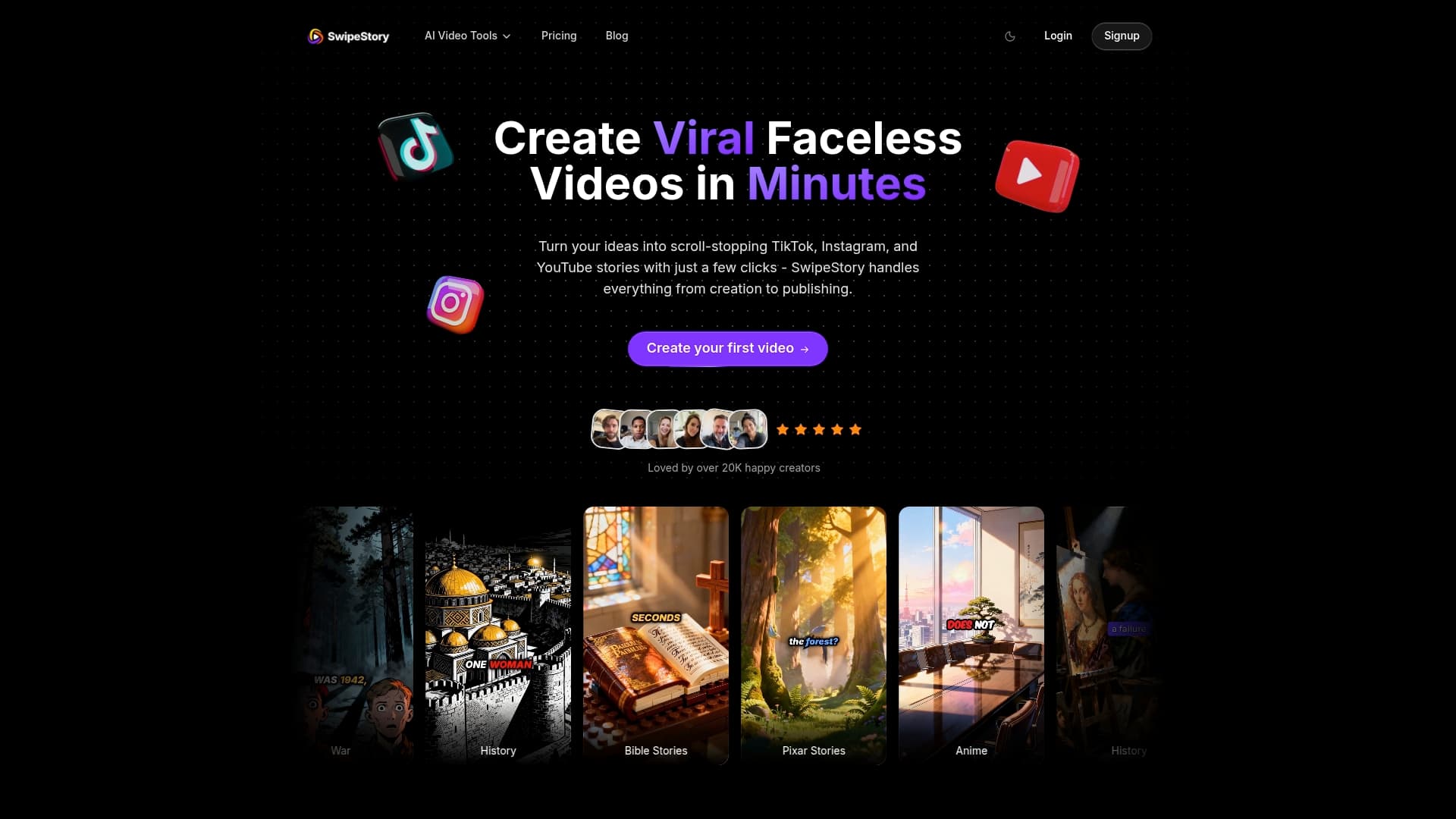
The AI video generator takes a text prompt and produces a complete short video with script, voiceover, visuals, and captions. No crew. No editing software. No technical background required. Creators can export directly to TikTok, Instagram, and YouTube formats from one session. Swipestory has generated over 60,000 short videos for creators at every experience level, and the free AI video tools let you test the workflow before committing to a plan. Check the pricing options to find the tier that matches your publishing frequency.
FAQ
What does it mean to democratize video production?
Democratizing video production means removing the cost, skill, and equipment barriers that previously limited professional video to well-funded teams. AI tools now let any creator produce polished video content from a text prompt alone.
How much can AI reduce video production costs?
AI can reduce production costs by up to 90% by eliminating expenses for crew, location, and equipment. That savings apply to both one-off videos and ongoing content campaigns.
Do I need technical skills to use AI video tools?
No technical skills are required for most AI video platforms. Tools like Swipestory generate scripts, voiceovers, and finished videos from plain-language prompts, making the process accessible to first-time creators.
How does AI video creation affect content quality?
AI raises the floor for production quality while shifting the ceiling toward creative judgment. The best outputs come from creators who invest in clear briefs, strong brand standards, and consistent review processes.
Can AI video tools produce content for multiple social platforms?
Yes. AI-generated videos adapt easily for TikTok, Instagram Reels, YouTube Shorts, and other formats from a single source, eliminating the need to reshoot or re-edit for each channel.
