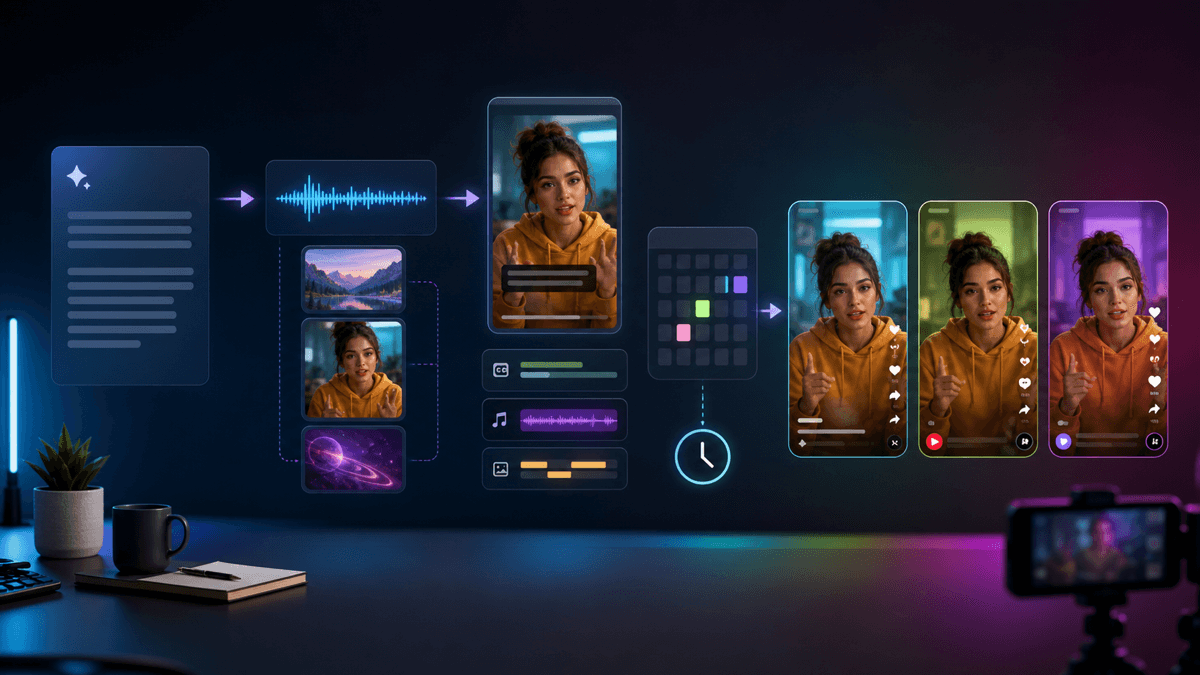
AutoShort Alternative: Better AI Shorts Workflows

Stella writes SwipeStory guides about AI faceless video creation, short-form video strategy, creator tools, and automated publishing workflows.
The best AutoShort alternative for most creators is SwipeStory if your goal is to turn prompts or scripts into finished faceless videos with voiceover, captions, visuals, music, rendering, and scheduled publishing across TikTok, YouTube Shorts, and Instagram Reels. AutoShort is worth testing if you specifically want its viral-cloning angle and TikTok/YouTube auto-posting. Choose SwipeStory when you want a broader short-form workflow, more platform coverage, and a clearer path from idea to repeatable series.
That distinction matters because "AI shorts automation" can mean several different things: copying a viral format, generating a brand-new faceless video, clipping an existing long video, or managing a publishing calendar. This guide compares AutoShort against SwipeStory and a few adjacent alternatives so you can pick the tool that matches the actual bottleneck in your workflow.
Quick Verdict
| Need | Best fit | Why |
|---|---|---|
| Prompt or script to scheduled faceless videos | SwipeStory | Full creation workflow plus series and multi-platform publishing |
| Viral formula cloning for TikTok and YouTube | AutoShort | Product is built around cloning proven formats and auto-posting |
| Story-led faceless channel output | StoryShort | Clear focus on series, narration, and AI-generated story videos |
| Broad AI video toolset | Revid.ai | 100+ tools, remixes, avatars, publishing, and auto-mode workers |
| Clipping long videos into shorts | A clipping-first tool | AutoShort alternatives are not always the same as repurposing tools |
If you already like AutoShort but feel boxed in by TikTok and YouTube, start by testing SwipeStory's faceless AI video generator. If you are still building the content system itself, read our best AI faceless video generators roundup after this comparison.
What AutoShort Does Well
AutoShort's current homepage positions the product around "viral cloning," fast AI video creation, and automatic posting. The public page says AutoShort can clone proven viral formulas, generate professional AI videos in about two minutes, and post automatically. It also calls out script generation, AI-selected visuals, ElevenLabs-style voice options, word-synced captions, art styles, multi-language support, and TikTok plus YouTube scheduling.
That is a strong pitch for creators who want a simple loop:
- Pick a niche or topic.
- Let the tool generate a short video.
- Auto-post the result on a schedule.
- Repeat the pattern as a series.
The product is not trying to be a full editing suite. It is trying to compress the repetitive parts of faceless channel production. If your channel is built around motivation clips, scary stories, facts, Reddit-style narratives, or trend-inspired shorts, that can be enough.
The current public pricing page lists a free tier with 80 credits per month, a $5 Trial plan, Starter at $19/month with 1,200 credits, Hobby at $29/month with 2,000 credits, Pro at $59/month with 4,000 credits, and Business at $129/month with 10,000 credits. AutoShort also shows estimated output volume, from about 30 videos per month on Starter to about 250 videos per month on Business.
The catch is strategic, not just technical. A tool built around viral cloning can help you move fast, but the content still needs a defensible angle. If the output looks like every other cloned trend in your niche, you may get speed without a durable brand.
Where AutoShort Can Feel Limiting
AutoShort is a good fit when the source of truth is "find a proven pattern and automate it." It is less obviously ideal when your goal is a custom series with platform-specific variants, a distinct brand voice, or a wider publishing mix.
The main limitations to evaluate before choosing AutoShort are:
- Platform scope: AutoShort emphasizes TikTok and YouTube. If Instagram Reels is a first-class channel for you, confirm the workflow before committing.
- Originality risk: Viral-cloning workflows can create sameness if you do not add new research, point of view, or story structure.
- Format control: Automated output is convenient, but serious creators still need to review hooks, captions, pacing, sources, and visuals before publishing.
- Brand fit: A niche channel often needs repeatable style rules, not just one-click generation.
- Policy awareness: YouTube now classifies square or vertical videos up to three minutes as Shorts, but videos over one minute with active Content ID claims can run into eligibility problems. Keep music and source material clean.
TikTok's own Creative Insights documentation is also a useful reminder: creative patterns can inform testing, but TikTok notes that Creative Insights data is sourced from ads and does not include organic posts. In other words, use competitor and trend research as input, not as a copy-paste production plan.
AutoShort vs SwipeStory
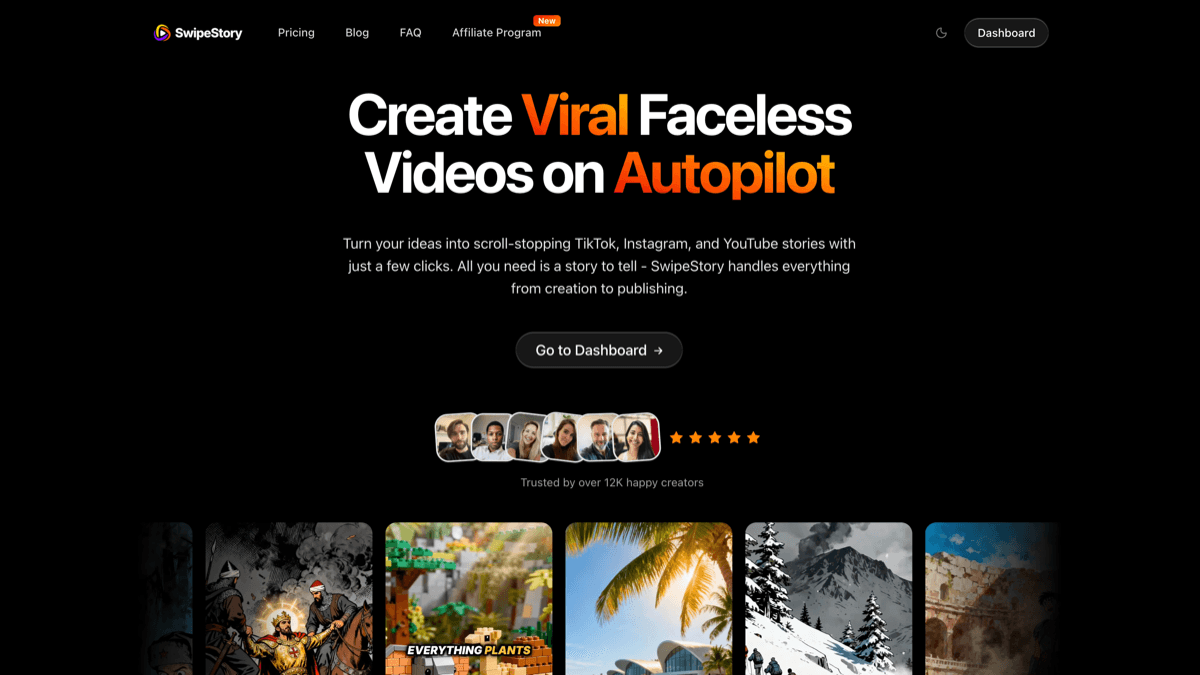
SwipeStory is the better AutoShort alternative when you want a complete faceless video workflow rather than a viral-cloning lane. It is built to turn prompts or scripts into vertical videos with generated visuals, voiceovers, captions, background music, editing, rendering, and scheduled publishing.
That makes SwipeStory a stronger fit for creators who want to build a repeatable content engine across TikTok, YouTube Shorts, and Instagram Reels. You can start from a topic, use AI video prompts for Shorts, shape the script, generate the video, then publish as part of a series.
On the current public pricing page checked May 9, 2026, SwipeStory lists annual sale pricing with Hobby at $16/month for 120 credits, Creator at $31/month for 300 credits, Influencer at $55/month for 600 credits, and Studio at $174/month for 2,000 credits. The same page lists automated posting, custom AI voiceovers, background music, auto-captions, no watermark, art styles, and fast video generation across plans.
Choose SwipeStory over AutoShort if:
- You want TikTok, YouTube Shorts, and Instagram Reels in the same workflow.
- You want to build original videos from prompts or scripts, not only clone viral formulas.
- You need series organization and scheduled publishing.
- You care about captions, voice, visuals, and rendering as one connected system.
- You want to test different content angles without rebuilding the workflow each time.
Choose AutoShort over SwipeStory if:
- Your main goal is to imitate viral formats quickly.
- TikTok and YouTube are enough for your channel.
- You prefer its credit model and specific niche presets.
- You are comfortable reviewing AI output before it posts.
For most creators searching "AutoShort alternative," the deciding question is simple: are you trying to clone a format, or are you trying to build a content system? SwipeStory is stronger for the second job.
What About AutoShorts.ai and Similar Names?
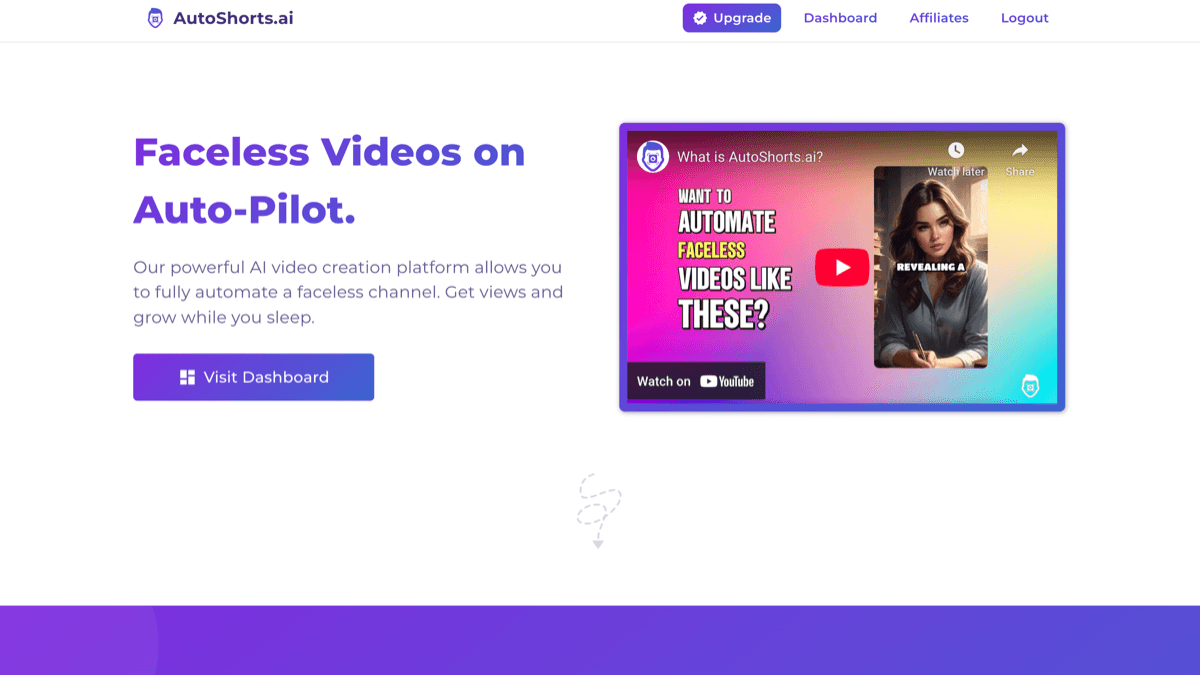
There is naming overlap in this category. AutoShort, AutoShorts.ai, AutoShorts.app, and other similarly named tools are not the same product. Before comparing pricing or features, verify the exact URL.
This matters because the search intent behind "AutoShort alternative" can split into three different jobs:
- A creator wants a replacement for AutoShort.org's viral-cloning and auto-posting workflow.
- A creator means AutoShorts.ai-style faceless channel automation.
- A creator actually needs AutoShorts.app-style clipping from existing long-form video.
Those are different buying decisions. A faceless generator starts from an idea or script. A clipping tool starts from footage you already have. A series automation tool starts from a repeatable channel formula. If you choose the wrong category, the tool can still be good and still fail your workflow.
Best AutoShort Alternatives To Consider
1. SwipeStory: Best Overall AutoShort Alternative
SwipeStory is the first recommendation if you want an AI shorts automation tool that covers the whole path from idea to published short. It is especially useful for creators who want faceless videos but do not want to manually stitch together scripts, voiceover, visuals, captions, and posting.
Use it for:
- Faceless educational shorts.
- Motivational or story-based videos.
- AI TikTok drafts from prompts.
- YouTube Shorts series.
- Instagram Reels made from the same core idea.
- Image-to-video or script-to-video workflows.
The strongest internal starting points are the AI TikTok video generator, AI YouTube Shorts generator, AI Reel generator, and faceless AI video generator.
2. StoryShort: Best For Story-First Faceless Channels
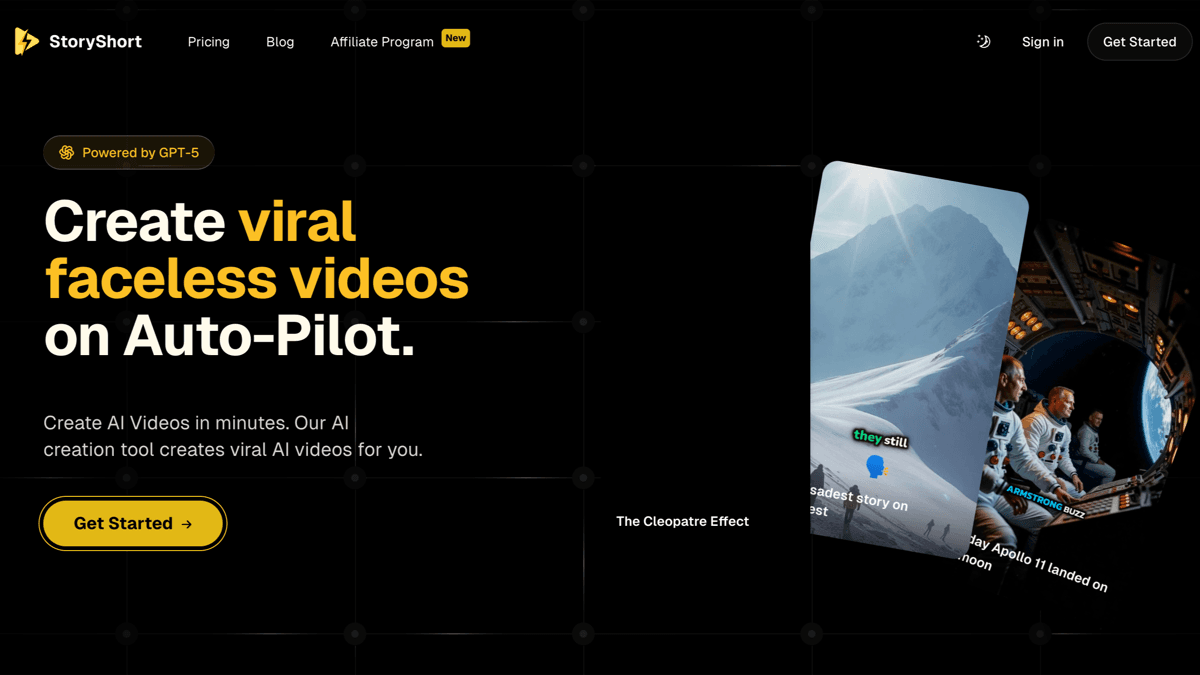
StoryShort is worth comparing if your channel is built around stories, history, facts, Reddit-style content, or serialized faceless videos. Its current pricing page lists Starter at $39 for 40 videos per month, Growth at $69 for 120 videos, Influencer at $129 for 240 videos, and Ultra at $199 for 500 videos. The plans include voiceovers, AI-generated content, background music, no watermark, downloads, and auto-posting.
The tradeoff is price and focus. StoryShort is narrower than Revid and more specialized than SwipeStory. That can be good if your channel is clearly story-led. It can be limiting if you want more platform-specific workflows or a broader creator toolkit.
3. Revid.ai: Best For A Broad AI Video Toolkit
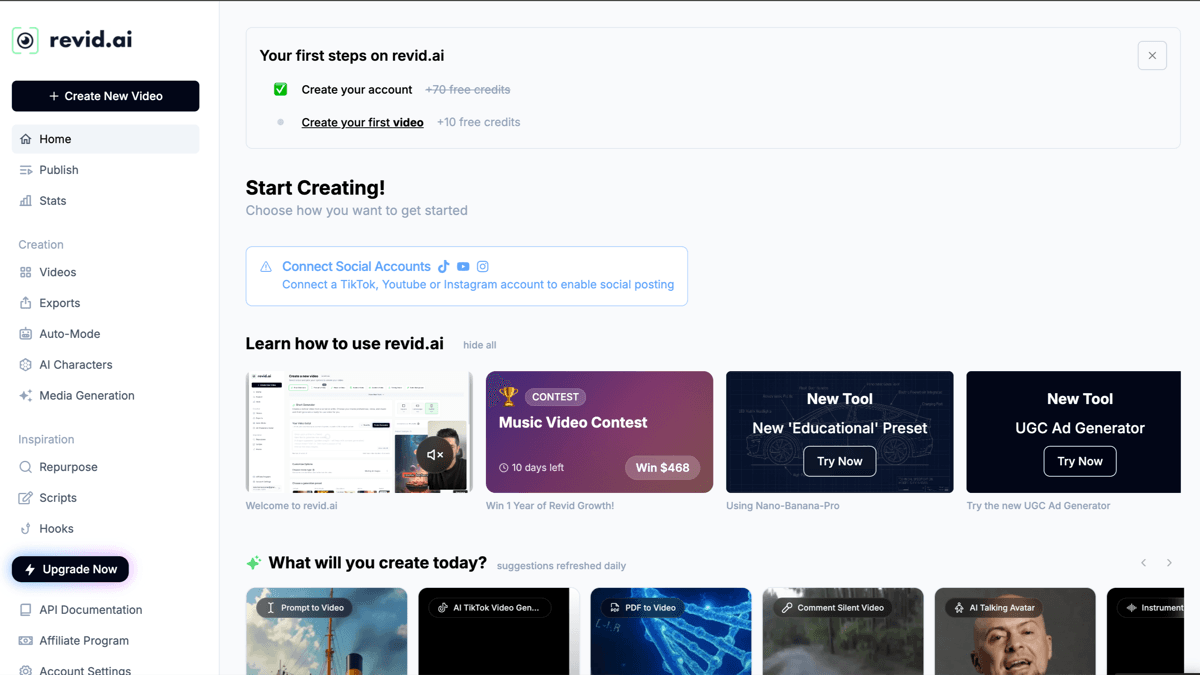
Revid.ai is the best alternative when you want maximum breadth. Its current pricing page lists a Hobby plan at $39/month, a Growth plan shown at $39/month during the surfaced promo state, Elite at $89/month, and Ultra at $199/month. The Growth tier highlights 100+ AI video tools, 70+ language voiceovers, hooks, scripts, rewrites, publishing to TikTok, Instagram, and YouTube, API/MCP/CLI access, 3 Auto-Mode Workers, and 2,000 monthly AI credits.
That is a lot of surface area. Revid is a strong choice if you want to experiment across AI avatars, remixing, podcasts, links, recordings, and many niche generators. It is less ideal if you want a focused workflow with fewer decisions.
4. A Clipping Tool: Best If You Already Have Footage
If your real problem is "I have podcasts, webinars, interviews, or long YouTube videos and need shorts," do not buy a prompt-first faceless generator just because the keyword says "AI shorts." You need clipping, transcription, reframing, captions, and highlight detection.
AutoShort alternatives like SwipeStory, StoryShort, and Revid can help you create content from scratch. Clipping-first products help you repurpose existing footage. Both categories can publish short-form video, but they start from different raw material.
How To Choose The Right AI Shorts Automation Tool
Use this decision framework before signing up:
| Question | If yes | Better category |
|---|---|---|
| Do you already have long videos? | You need cut-downs, not full generation | Clipping tool |
| Do you want original faceless shorts from prompts? | You need scripts, voice, visuals, captions, and rendering | SwipeStory |
| Do you mainly want to clone viral formulas? | You need trend replication and fast output | AutoShort |
| Do you publish story channels? | You need narration and episode-like pacing | StoryShort |
| Do you want many AI utilities in one workspace? | You need breadth more than focus | Revid.ai |
Also check platform rules before building the system. YouTube's current Shorts documentation says square or vertical videos up to three minutes can be classified as Shorts when uploaded under the applicable timing rules. TikTok's Creative Insights can help you study ad creative patterns, but it is not the same as organic creator search data. For organic TikTok research, pair trend scans with your own retention notes, comment analysis, and repeatable hook testing.
Recommended SwipeStory Workflow
Here is a practical replacement workflow if you are switching from AutoShort to SwipeStory:
- Start with one narrow content premise, such as "90-second personal finance myths for beginners" or "daily one-minute strange history stories."
- Draft five hook angles using the TikTok hook examples library.
- Turn the best hook into a short script with one clear payoff.
- Generate a vertical faceless draft in SwipeStory.
- Review voiceover, captions, visuals, pacing, and source claims before posting.
- Schedule the winning format as a series.
- Keep a weekly notes file with hook, topic, retention, comments, and next test.
The key is not just replacing one button with another button. The better move is replacing a fragile one-off generation habit with a repeatable content operating system.
Final Recommendation
SwipeStory is the best AutoShort alternative if you want original faceless short-form videos, scheduled publishing, and a workflow that can cover TikTok, YouTube Shorts, and Instagram Reels from the same content engine. AutoShort remains a reasonable choice for creators who specifically want viral-cloning and TikTok/YouTube automation at its listed price points.
If you are still deciding, use this shortcut: choose AutoShort for viral cloning, choose StoryShort for story channels, choose Revid for a broad AI toolkit, and choose SwipeStory when you want the cleanest prompt-or-script-to-published-video system for faceless shorts.
Frequently Asked Questions
What is the best AutoShort alternative?
SwipeStory is the best AutoShort alternative for creators who want prompt-to-video or script-to-video faceless shorts with voiceover, captions, visuals, rendering, series automation, and scheduled publishing across TikTok, YouTube Shorts, and Instagram Reels.
Is AutoShort the same as AutoShorts.ai?
No. AutoShort, AutoShorts.ai, and AutoShorts.app refer to different products or product pages in the short-form video space. Check the exact URL before comparing features, pricing, or reviews.
Should I use AutoShort or SwipeStory?
Use AutoShort if your main goal is viral-cloning and TikTok/YouTube auto-posting. Use SwipeStory if you want a broader AI short video generator for original faceless videos, multiple platforms, and repeatable series workflows.
Can AutoShort alternatives post to YouTube Shorts?
Some can, but the details vary by product and plan. YouTube currently supports square or vertical Shorts up to three minutes under its Shorts classification rules, so check each tool's export length, aspect ratio, music handling, and posting integration before relying on automation.
