Creatify Alternative for UGC Ads

Stella writes SwipeStory guides about AI faceless video creation, short-form video strategy, creator tools, and automated publishing workflows.
The best Creatify alternative for UGC ads is SwipeStory when you want faceless short-form product stories, educational ads, creator-style scripts, voiceovers, captions, music, rendering, and scheduled publishing without building every video around an AI avatar. Creatify is a strong AI ad generator for product-link ads, avatar-led UGC, and ecommerce variations. Choose SwipeStory when the repeatable job is turning prompts or scripts into publishable TikToks, YouTube Shorts, and Instagram Reels.
Updated June 22, 2026. We checked Creatify's current homepage, UGC use-case page, URL-to-video page, AI video generator page, pricing page, SwipeStory product pages, YouTube AI disclosure guidance, TikTok ad specifications, and Meta safe-zone guidance before writing this comparison. Product features, credits, prices, export rules, and platform disclosure rules change often, so verify the linked sources before buying or publishing.
Quick Verdict
| Need | Better fit | Why |
|---|---|---|
| AI avatar UGC ads from product pages | Creatify | Creatify is built around URL-to-video, AI actors, product ads, and rapid ad creative variations |
| Faceless product stories, explainers, and organic short-form series | SwipeStory | SwipeStory starts from prompts or scripts and produces vertical videos with AI visuals, voiceover, captions, music, editing, rendering, and publishing |
| Ecommerce ad testing with product URLs and many hooks | Creatify | Its public pages emphasize product-link inputs, avatar selection, scripts, and ad variations |
| No-camera TikTok, Shorts, and Reels content around a niche or offer | SwipeStory | The workflow is closer to creator publishing than avatar ad production |
| Both paid avatar ads and recurring faceless content | Use both deliberately | Use Creatify for avatar/product ad tests, then use SwipeStory for repeatable faceless social episodes |
If your main brief is "turn this product URL into avatar-led UGC-style ad variants," test Creatify first. If the brief is "turn this offer, niche, script, or content angle into a short-form video series," start with SwipeStory's faceless AI video generator, Script to Video AI, or Prompt to Video. Those workflows are more direct when the video does not need a synthetic creator on screen.
What Creatify Does Well
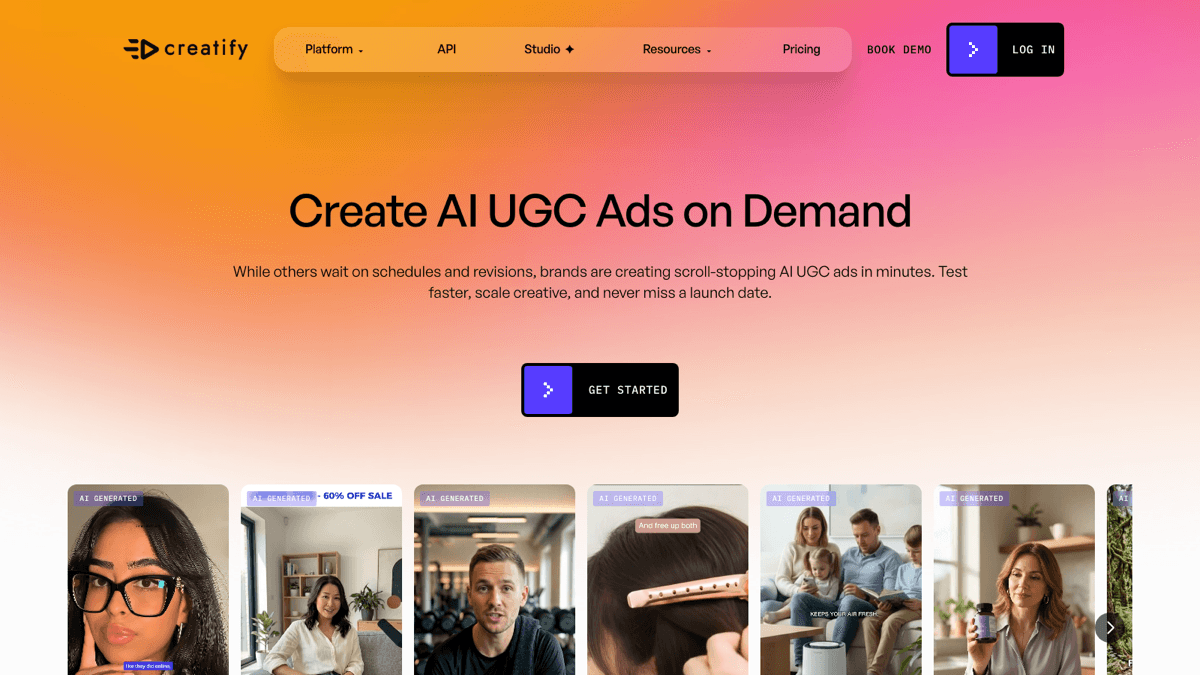
Creatify's AI UGC page is clear about the product center: create AI UGC ads on demand, reduce production scheduling, and test more creative without waiting on creator coordination. The same page points to AI avatars, URL-to-ad creation, product video, product photos, and exports for TikTok, Instagram, Facebook, and YouTube.
That makes Creatify useful when the ad concept depends on a creator-style presenter or a product page. A marketer can paste a product URL, generate script angles, choose an avatar, create product-centric scenes, and iterate on hooks. For ecommerce teams, agencies, and performance marketers, that is a real category fit.
Creatify deserves a test if:
- You want avatar-led UGC-style ads instead of faceless narration.
- You have product pages, product photos, or ecommerce offers ready to turn into ads.
- You need multiple hooks, scripts, avatars, languages, or product ad variants.
- You want creative that feels closer to paid social ad testing than organic content planning.
- You are comfortable reviewing AI actors, claims, disclosures, and landing-page consistency before launch.
The tradeoff is focus. Avatar UGC tools are optimized for ad variation and synthetic presenter formats. That can be exactly right for a product launch. It can also add extra decisions when the better creative is a faceless explainer, a visual product story, a niche education post, or a recurring organic series.
Creatify's URL-To-Video Workflow
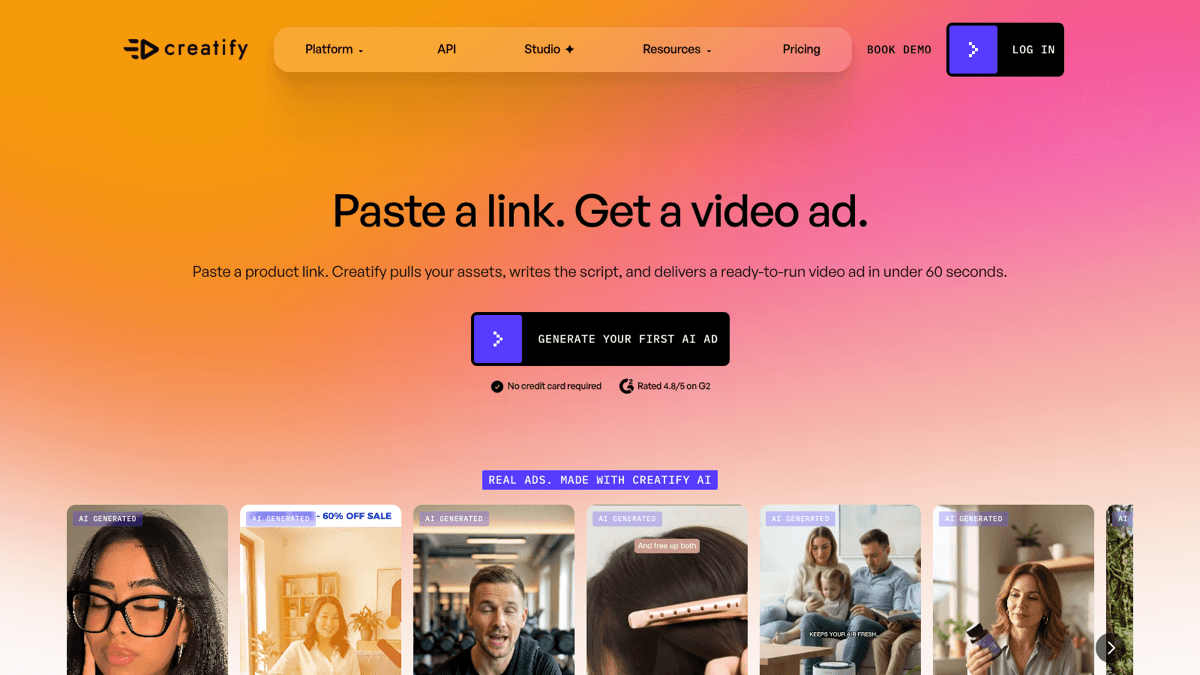
The Creatify URL-to-video page says the workflow starts with a product link, then pulls assets, writes a script, and creates a ready-to-run video ad quickly. Its broader AI video generator page describes product URL inputs, a large avatar library, voice and language options, editing controls, and platform formats for TikTok, Instagram, YouTube, and other channels.
That is strongest when the product page already contains the raw material for the ad. A physical product page can provide images, benefits, use cases, and offer context. Creatify can then help turn those ingredients into avatar-led or product-led ad variants.
SwipeStory starts from a different assumption. The content idea may not be a product URL. It may be:
- A founder's 30-second product lesson.
- A list of mistakes buyers make before choosing a tool.
- A faceless "problem, insight, fix" video.
- A niche educational series that mentions the product naturally.
- A script for a TikTok, Short, or Reel that needs visuals and narration.
For those jobs, a product URL is not always the best creative source. The best input is often a tight script, clear hook, visual direction, and a platform-specific output target. That is why AI TikTok video generator, AI YouTube Shorts generator, and AI Reel generator workflows can be a better fit when the goal is consistent short-form publishing, not only paid ad variant generation.
Creatify Pricing Signals Checked June 22, 2026
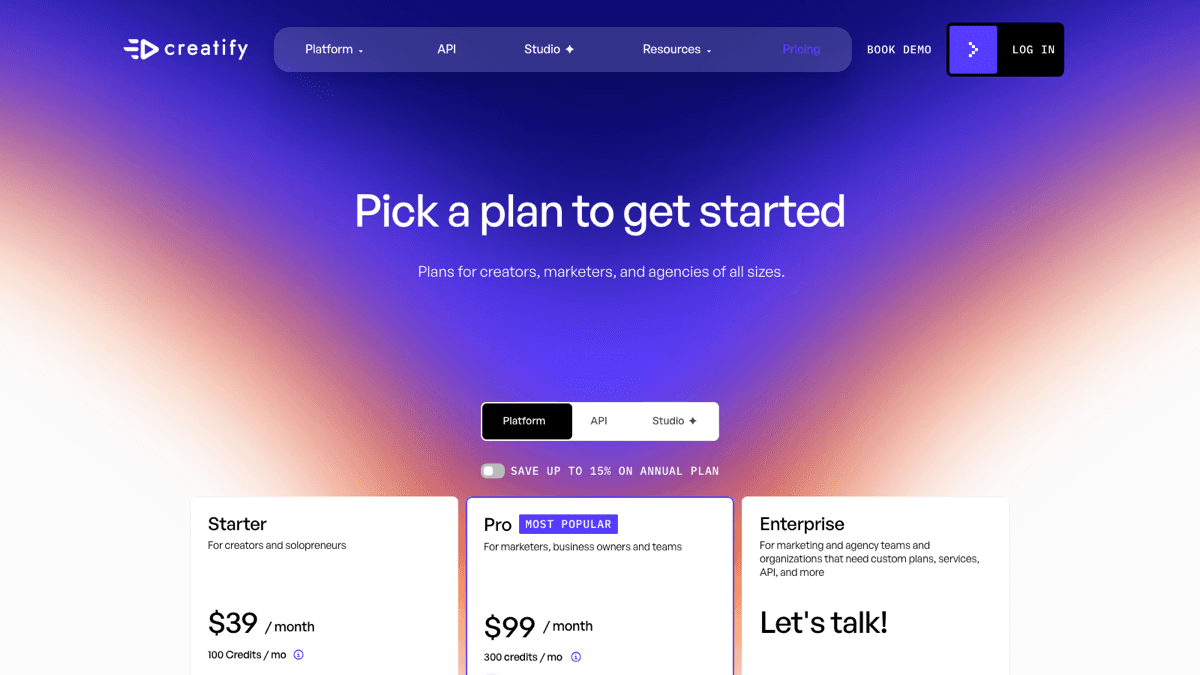
The live Creatify pricing page showed a Starter plan at $39/month with 100 credits per month, a Pro plan at $99/month with 300 credits per month, and an Enterprise option that prompts teams to contact sales during this check. The pricing HTML also showed a free plan with 10 monthly credits, limited video or image ad creation, access to AI actors and templates, and watermarked exports.
Do not compare Creatify vs SwipeStory only by headline price. Compare the cost of the workflow you repeat.
| Cost driver | Why it matters |
|---|---|
| Avatar usage | AI actors, realistic delivery, custom avatars, and language variants can change review time and credit use |
| Video volume | Paid creative testing often needs many hooks and variants, not one polished video |
| Revision loops | Avatar fit, script accuracy, product claims, captions, and landing-page alignment all need review |
| Output format | Paid ads, organic Shorts, Reels, and TikToks can have different export and disclosure requirements |
| Publishing cadence | A weekly ad test and a daily creator series should not be bought as the same job |
For SwipeStory, check the current pricing page before planning a high-volume series. The practical question is not "which subscription is cheaper?" It is "which system gets more publishable vertical drafts through review with fewer repeated handoffs?"
Where SwipeStory Is Different
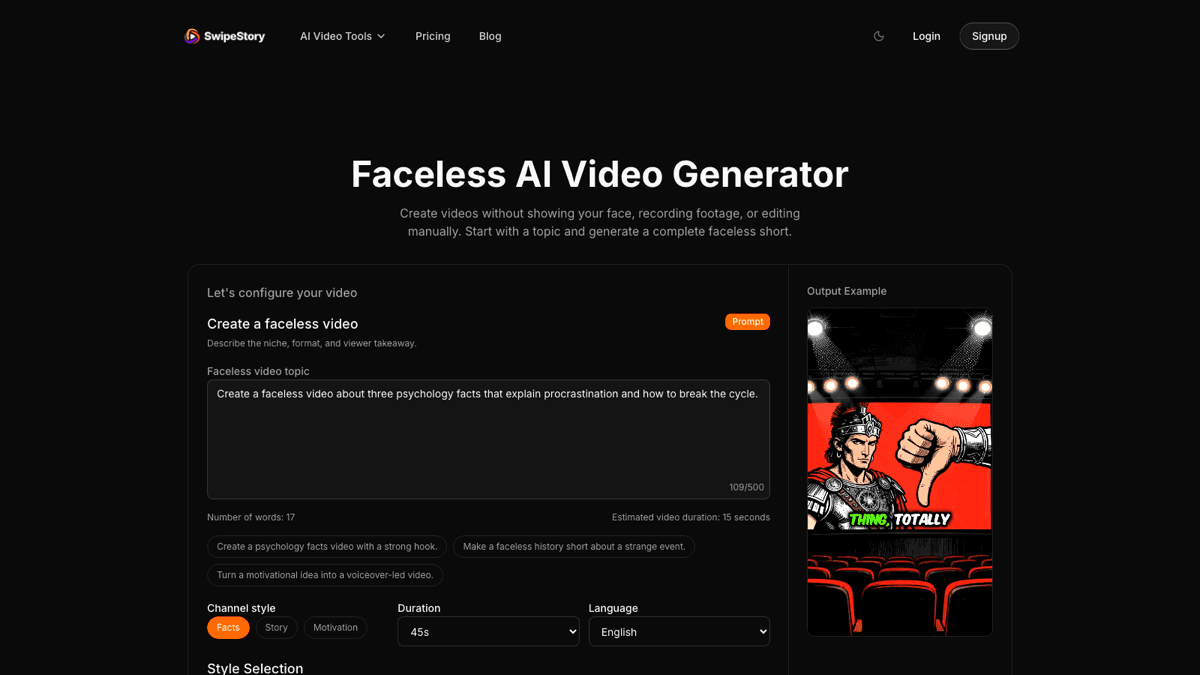
SwipeStory is the stronger Creatify alternative when the output should be a no-camera short-form video instead of an avatar ad. It turns prompts or scripts into vertical videos with AI-generated visuals, voiceovers, captions, background music, editing, rendering, and scheduled publishing for TikTok, YouTube Shorts, and Instagram Reels.
This distinction matters because "UGC-style" can mean two different things:
| Starting problem | Better category |
|---|---|
| "We need avatar creator ads from product URLs" | AI UGC ad generator such as Creatify |
| "We need faceless product stories or educational posts" | Script-to-video or prompt-to-video workflow such as SwipeStory |
| "We need real customer proof" | Human creator or customer content, not synthetic UGC |
| "We need multilingual avatar reads" | Avatar and localization platform |
| "We need a recurring no-camera content calendar" | Short-form generation and scheduling workflow |
SwipeStory should not pretend to replace every Creatify use case. If your winning ad needs a realistic synthetic creator holding a product, Creatify's avatar workflow is closer to that job. If your winning format is a narrated problem-solution video, founder-style educational series, faceless demo, product myth, or niche explainer, the avatar layer may be extra work.
For example, a skincare brand could test a Creatify avatar ad where a synthetic creator introduces the product. The same brand could use SwipeStory for a faceless education series:
- "Three mistakes people make with retinol."
- "Why your moisturizer pills under sunscreen."
- "How to read the first five ingredients on a label."
- "The difference between dry skin and dehydrated skin."
Those videos do not need a fake testimonial. They need a clear hook, safe product claims, useful visuals, readable captions, and a repeatable publishing rhythm.
UGC Ads Need Claim And Disclosure Review
No Creatify alternative removes the final policy review. Avatar ads, synthetic voices, AI-edited product scenes, generated testimonials, and faceless AI visuals can all create trust and disclosure questions.
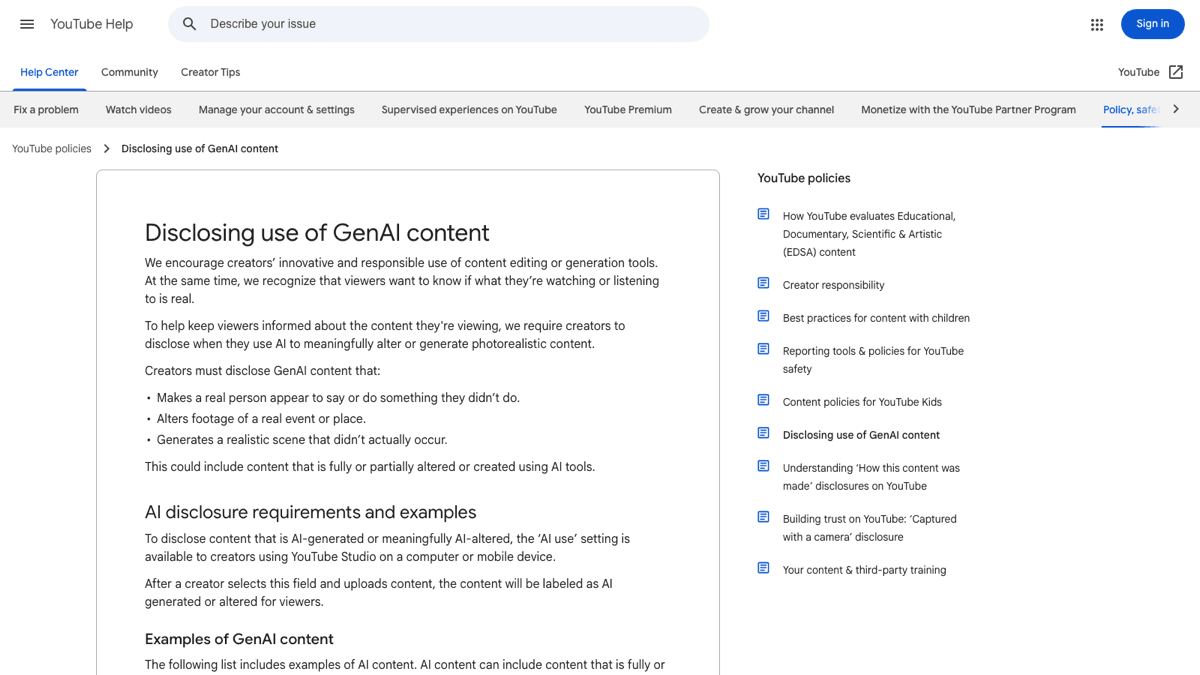
YouTube Help says creators should disclose AI-generated or meaningfully altered realistic content, including cases where a real person appears to say or do something they did not do, a real event or place is altered, or a realistic scene is generated. YouTube's May 2026 update also said it is rolling out internal signals to help identify significant photorealistic AI use.
TikTok's auction in-feed ad specifications are ad-focused, but they are useful production guardrails. The current page lists vertical 9:16 as the recommended Non-Spark ad format with at least 540 x 960 pixels, common video formats such as MP4 and MOV, a file size up to 500 MB, and duration up to 10 minutes.
Meta's safe-zone guidance reminds advertisers that key text, logos, and calls to action can be cropped or covered by Stories and Reels interface elements. That applies whether the ad was made in Creatify, SwipeStory, a manual editor, or a creator studio.
Before publishing any AI UGC ad, review:
- Does the ad imply a real customer experience that did not happen?
- Does an AI avatar look like a real person, employee, creator, expert, or customer?
- Are health, income, savings, performance, or product claims substantiated?
- Does the landing page support the same promise as the video?
- Are AI labels, actor rights, voice rights, music rights, and stock-media rights clear?
- Are captions and calls to action visible inside platform safe zones?
- Does the video still make sense without sound in the first two seconds?
The safest AI ad workflow is not the one that hides AI use. It is the one that makes the creative easier to produce while keeping claims, source material, and audience trust reviewable.
A Practical Creatify vs SwipeStory Test
Do not switch tools because a comparison table says one is better. Run a small test with the same offer.
Use this one-hour setup:
| Step | Creatify test | SwipeStory test |
|---|---|---|
| 1 | Paste one product URL and choose one avatar-led ad angle | Write one faceless ad script or product education prompt |
| 2 | Generate three hook variations | Generate three script or topic variations |
| 3 | Review avatar fit, product accuracy, captions, and claim risk | Review visual fit, voiceover, captions, and platform pacing |
| 4 | Export one draft for a target platform | Export or schedule one draft for a target platform |
| 5 | Count fixes before the video is publishable | Count fixes before the video is publishable |
| 6 | Decide which workflow makes video two easier | Decide which workflow makes video two easier |
If Creatify wins, your ad likely needs avatar-led product presentation, URL-to-video speed, or many paid creative variants. If SwipeStory wins, the avatar was probably not the bottleneck. Move one faceless ad or organic series into SwipeStory first, then keep Creatify for product-link avatar tests where it clearly helps.
Best Creatify Alternatives To Consider
1. SwipeStory: Best For Faceless Short-Form Product Stories
SwipeStory is the best Creatify alternative when your main job is repeatable no-camera TikToks, YouTube Shorts, and Instagram Reels from prompts or scripts. Use it for faceless product education, creator-style explainers, founder narration, niche content, and short-form series where the video needs visuals, voiceover, captions, music, rendering, and publishing.
Start with faceless AI video generator for no-camera content, Script to Video AI when the narration is ready, or Prompt to Video when you only have the angle.
2. HeyGen: Better For Avatar Presenter And UGC-Style Reads
HeyGen is worth testing when the creative depends on a talking avatar, digital twin, localization, or presenter-led ad. Read the HeyGen alternative for faceless shorts guide if your real decision is whether avatar video or faceless video fits the campaign.
3. InVideo Or VEED: Better For Broader Editing And Media Suites
InVideo and VEED can make sense when you want broader editing, media, stock, templates, captions, or repurposing workflows. See the InVideo AI alternative and VEED AI alternative guides if your comparison is less about UGC ads and more about general video creation.
4. Real Creators: Better When Trust Depends On Lived Experience
Use real creators when the ad promise relies on actual use: "I tried this," "this changed my routine," "my results after 30 days," or "here is my honest review." AI can help draft, caption, repurpose, or schedule that content, but synthetic UGC should not invent lived experience.
Final Recommendation
Use Creatify when the job is product-link ad generation, avatar-led UGC, ecommerce creative testing, multilingual ad variants, or fast paid social ad concepts. It is a strong AI UGC ads tool, and its official pages are clearly aimed at advertisers who want more creative variants without traditional production timelines.
Use SwipeStory when the job is faceless short-form production from ideas or scripts. It is the better Creatify alternative for creators and small teams who want no-camera product stories, educational ads, niche videos, and repeatable TikTok, YouTube Shorts, and Instagram Reels workflows with AI visuals, voiceover, captions, music, editing, rendering, and scheduled publishing.
The simple decision: if the viewer needs to see a synthetic creator, test Creatify. If the viewer needs a fast faceless story, lesson, product angle, or short-form series, test SwipeStory and measure how many reviewable vertical drafts you can create in one focused session.
Frequently Asked Questions
What is the best Creatify alternative for faceless ads?
SwipeStory is the best Creatify alternative when you want faceless short-form ads or organic videos from prompts and scripts. It is built around no-camera vertical videos with AI visuals, voiceover, captions, music, rendering, and publishing, not avatar-first UGC ad production.
Is Creatify better than SwipeStory for UGC ads?
Creatify is usually better when the ad needs an AI avatar, product URL input, ecommerce ad variants, or avatar-led UGC-style creative. SwipeStory is better when the ad can be faceless and the bottleneck is turning scripts or ideas into repeatable TikToks, Shorts, and Reels.
Can SwipeStory replace real UGC creators?
No tool should replace real creators when the value comes from actual product use, lived experience, or a real testimonial. SwipeStory is better for faceless product stories, educational shorts, and repeatable no-camera content. Use real creators when trust depends on authentic use.
Does Creatify have a free plan?
Creatify's pricing page showed a free plan with monthly credits and watermarked exports when checked on June 22, 2026. Pricing and credit rules can change, so check the live Creatify pricing page before planning a campaign.
What should I test before switching from Creatify?
Create one Creatify avatar ad and one SwipeStory faceless video from the same offer. Compare review time, product accuracy, captions, disclosure risk, visual quality, export steps, and whether the second video would be easier to make in the same workflow.
