Simple Talking-Head Video Examples for Creators

Stella writes SwipeStory guides about AI faceless video creation, short-form video strategy, creator tools, and automated publishing workflows.
A talking-head video is a direct-to-camera recording where one person speaks clearly to the audience with minimal production complexity. These videos are the backbone of social media content on TikTok, Instagram Reels, and YouTube Shorts because they prioritize human connection over cinematic polish. The best examples of simple talking-head videos prove that a clear message, steady eye contact with the lens, and a basic setup consistently outperform overproduced content. This guide breaks down seven proven formats you can replicate today, plus the setup, scripting, and delivery techniques that make each one work.
1. Examples of simple talking-head videos that actually perform
The seven formats below cover the full range of goals a creator or marketer might have. Each one works because it centers the speaker's message, not the production budget.
Educational how-to clips
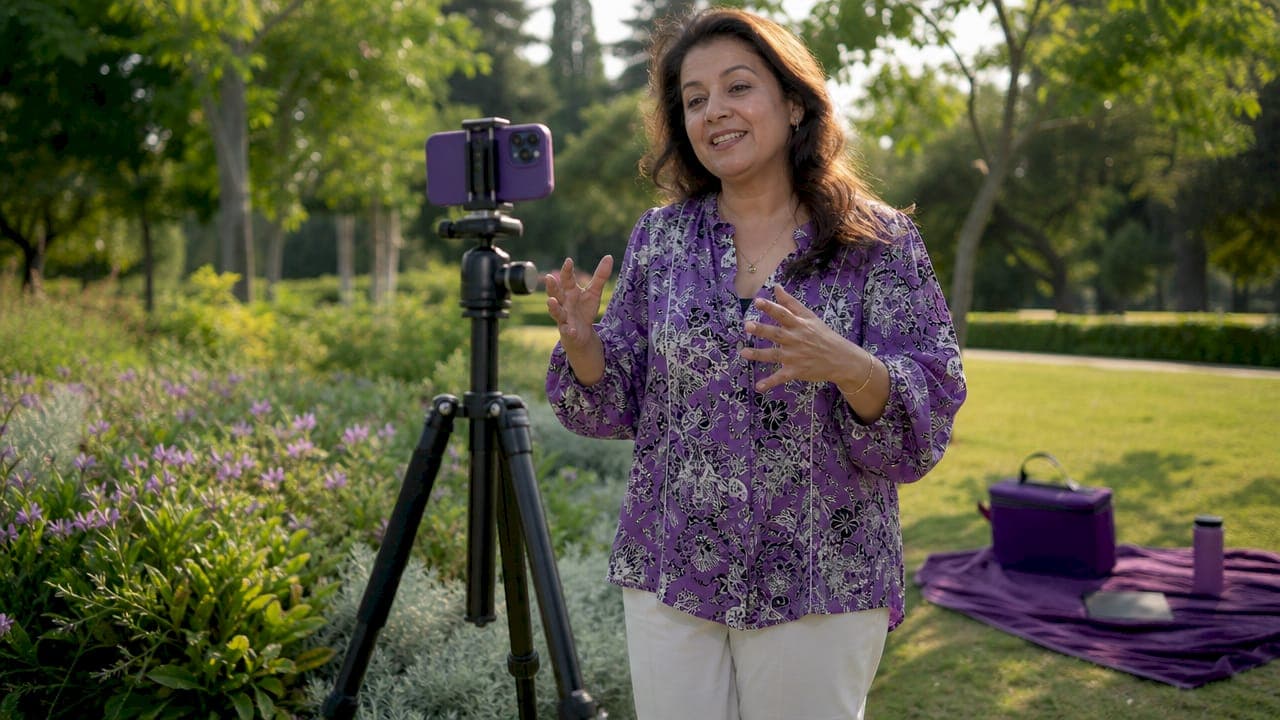
Educational clips are the most common talking-head format on social media. The creator explains one concept, skill, or process in under 60 seconds. Think "How to write a cold email subject line" or "Three ways to fix a slow website." The format works because viewers get immediate value without sitting through a long intro.
- Setup: Smartphone on a tripod, one window for light, clean wall behind you
- Script structure: State the problem, give the solution in three steps, close with one tip
- Platform fit: TikTok, YouTube Shorts, Instagram Reels
Pro Tip: Record the hook as a standalone sentence before you start the full video. If the hook does not make you want to keep watching, rewrite it before you record the rest.
Thought leadership opinion pieces
Opinion videos position you as a credible voice in your niche. You share a direct take on an industry trend, a common mistake, or a contrarian view. These videos build trust faster than any other format because viewers see your reasoning in real time.
- Script structure: State your opinion in sentence one, give two or three reasons, invite a response
- Delivery tip: Speak slightly slower than you think is natural. Confidence reads as authority.
- Platform fit: LinkedIn video, YouTube, Instagram
Product or service explainers
Explainer videos walk viewers through what a product does and why it matters. The speaker addresses the camera as if talking to one specific person with one specific problem. Vertical video format under 60 seconds performs best for top-of-funnel social media content on TikTok and Instagram Reels, making this format ideal for product awareness campaigns.
- Script structure: Name the problem, introduce the product, show the result, call to action
- Key rule: One product feature per video. Never try to cover everything.
Social media authenticity updates
These are low-edit, high-personality clips. A creator shares a behind-the-scenes moment, a personal win, or a raw reaction. The lack of polish is the point. Viewers respond to realness, and this format requires zero post-production beyond a trim.
- Setup: Handheld phone, natural light, wherever you are
- Length: 15–30 seconds
- Platform fit: Instagram Stories, TikTok, YouTube Shorts
Q&A or FAQ response videos
Q&A videos answer one question per clip. Pull the question from your comments, DMs, or email inbox. This format signals that you listen to your audience, which builds loyalty fast. It also gives you an endless content calendar because your audience generates the topics.
- Script structure: Read the question aloud, answer it directly, add one bonus insight
- Batch tip: Record five Q&A videos in one session to build a content bank
Sales outreach videos
Sales outreach videos replace cold emails with a 60-second personal message. The speaker addresses the prospect by name, references a specific detail about their business, and closes with one clear next step. Human connection in a talking-head video is more persuasive than complex editing or expensive equipment, which is exactly why this format converts.
- Length: 45–90 seconds maximum
- Key rule: One prospect, one problem, one ask per video
Case study summary videos
Case study videos present a client result in a structured narrative. You state the client's problem, describe the approach, and share the outcome. This format works well for B2B marketers because it builds credibility without requiring a written document. Keep it under two minutes and use a simple graphic or text overlay to highlight the key result.
- Script structure: Problem, solution, result, one-line takeaway
- Platform fit: LinkedIn, YouTube, email campaigns
2. Essential setup tips for creating simple talking-head videos
Good production does not require expensive gear. Creators can make professional talking-head videos with just a smartphone, an affordable tripod, and basic lighting. A $20–$40 tripod and a $25–$80 lighting kit are enough for quality output that performs on every major platform.
Camera and framing
Use your smartphone's rear camera for the sharpest image. Mount it on a tripod at eye level so you are not looking up or down at the lens. Rule of thirds framing places the speaker on the left or right vertical third to maintain eye contact and visual interest. This single framing choice makes your video look intentional rather than amateur.
Lighting
Natural window light is free and effective. Position yourself facing the window so the light falls on your face evenly. If you shoot at night or in a dark room, a basic ring light or a two-panel LED kit solves the problem. Avoid overhead lighting, which creates unflattering shadows under your eyes and chin.
Audio
Audio quality is critical. Viewers tolerate imperfect visuals but abandon videos with poor sound. A lavalier microphone in the $25–$40 range, clipped close to your collar, delivers a significant improvement over your phone's built-in mic. Record in a quiet room and hang a blanket or jacket behind you to reduce echo.
Pro Tip: Clap once before you start speaking. The spike in your audio waveform makes it easy to sync audio and video in editing, and it also tells you instantly if your mic is working.
| Setup Element | Budget Option | Quality Benchmark |
|---|---|---|
| Camera | Smartphone rear lens | 1080p or 4K capable |
| Stabilization | $20–$40 tripod | Eye-level, no shake |
| Lighting | Window light or ring light | Even, shadow-free face |
| Audio | $25–$40 lavalier mic | Clear, no echo |
| Background | Clean wall or bookshelf | No clutter or distractions |
For a deeper look at simple video tools that work without a production team, Swipestory's 2026 guide covers the full toolkit for non-creators.
3. Effective scripting and delivery for talking-head videos
A structured script is the difference between a video that holds attention and one that loses viewers in the first ten seconds. Effective talking-head scripts consist of 3–5 core points, a strong hook within 3 seconds, and a clear call to action.
- Write your goal in one sentence. Before you script anything, write down exactly what you want the viewer to do or believe after watching. This sentence becomes your north star.
- Craft a 3-second hook. Open with a bold claim, a surprising fact, or a direct question. Viewers decide whether to keep watching within the first three seconds.
- List 3–5 core points. Experienced creators plan a brief hook and a 3–5 point outline before recording. Each point should be one sentence long in your outline.
- Close with one call to action. Tell the viewer exactly what to do next. "Follow for more," "Comment your question," or "Click the link" all work. Never give two calls to action in one video.
- Choose outline over full script for social content. Short scripts or outlines keep delivery natural and prevent inflated run time. Full scripts suit paid ads. Outlines suit thought leadership and social clips.
Pro Tip: Read your outline aloud three times before you hit record. By the third read, your delivery will sound natural instead of rehearsed.
4. Common pitfalls to avoid in talking-head videos
Most creators who struggle with talking-head videos make the same five mistakes. Fixing these issues costs nothing and immediately improves results.
- Obsessing over gear instead of message. Success comes from message clarity, audio, and workflow efficiency, not from camera specs. A creator with a clear story and a $30 mic will outperform one with a cinema camera and nothing to say.
- Ignoring audio. Audio is the most critical trust signal in any video. One bad audio session can undo weeks of audience building.
- Recording only one take. Recording multiple takes and slight angle variations saves editing time and improves final video quality. Capture more footage than you think you need.
- Cluttered backgrounds. A messy background pulls the viewer's eye away from your face. Use a plain wall, a tidy bookshelf, or a simple backdrop.
- No repeatable workflow. Creators who burn out usually have no system. Build a simple checklist: script, setup, record, edit, post. Run the same checklist every time to reduce decision fatigue and maintain consistency.
Key Takeaways
Simple talking-head videos succeed when clear messaging, reliable audio, and consistent delivery take priority over production complexity.
| Point | Details |
|---|---|
| Format variety drives reach | Use different formats like Q&A, opinion, and explainer to serve different audience needs. |
| Audio beats visuals | Viewers leave for bad sound but stay for imperfect video, so prioritize your microphone first. |
| Script structure prevents rambling | A 3–5 point outline with a 3-second hook keeps every video tight and on message. |
| Minimal gear is enough | A smartphone, $20–$40 tripod, and basic lighting produce social-ready video quality. |
| Repeatable workflow prevents burnout | A consistent checklist from script to post reduces friction and keeps output steady. |
Why simplicity is the actual strategy
The conventional wisdom says you need better gear to grow. I disagree completely. The creators I have watched grow the fastest on TikTok and Instagram Reels in the past two years share one trait: they publish consistently, not perfectly. A talking-head video recorded on a phone in a quiet room, with a clear point and a confident delivery, will beat a beautifully shot video with no clear message every single time.
The part that surprises most beginners is how much eye contact matters. When you look directly into the lens, the viewer feels like you are talking to them personally. That feeling is more persuasive than any graphic, transition, or music bed you could add. Prioritizing eye-to-lens contact and authentic communication over technical complexity is not a beginner shortcut. It is the actual strategy that experienced creators use.
My honest advice: record your first ten videos without worrying about editing. Just hit record, say your piece, and post it. You will learn more from ten published videos than from one perfectly planned one that never gets made. Simplicity does not limit your creativity. It unlocks it.
— Jesse
Swipestory makes talking-head video production faster
Swipestory's AI tools are built for creators who want professional-looking output without a production team. The platform handles scriptwriting, voiceovers, and rendering automatically, so you spend your time on ideas rather than software settings. Swipestory has already generated over 60,000 short videos for thousands of creators across TikTok, Instagram, and YouTube.
If you want to turn a script into a finished video in minutes, the AI video generator is the fastest path from idea to post. For creators focused on education and explainer content, the educational video maker handles the full production workflow with AI assistance. Both tools work without any video editing experience.
FAQ
What equipment do I need for a simple talking-head video?
A smartphone with a 1080p or 4K camera, a $20–$40 tripod, and a $25–$40 lavalier microphone are enough for social-ready talking-head videos. Natural window light works as well as a basic ring light for most shooting conditions.
How long should a talking-head video be for social media?
Vertical talking-head videos under 60 seconds perform best for top-of-funnel content on TikTok and Instagram Reels. For YouTube or LinkedIn, 2–5 minutes works well for thought leadership and educational formats.
Do I need a full script for a talking-head video?
A short outline of 3–5 points works better than a full script for most social content. Full scripts suit paid ads where every word is controlled. Outlines keep delivery natural and prevent the stiff, read-aloud tone that loses viewers.
What is the most common mistake in talking-head videos?
Prioritizing gear over message is the most common mistake. Clear audio, a direct point, and consistent eye contact with the lens drive engagement far more than camera quality or production complexity.
How do I make my talking-head delivery feel natural?
Read your outline aloud three times before recording, then speak to the lens as if addressing one specific person. Recording multiple takes gives you options in editing and helps your delivery loosen up between takes.
