StoryShort AI Alternative: Better Faceless Story Videos

Stella writes SwipeStory guides about AI faceless video creation, short-form video strategy, creator tools, and automated publishing workflows.
The best StoryShort AI alternative for most creators is SwipeStory if you want one workflow for prompt or script generation, AI visuals, voiceover, captions, music, rendering, and scheduled publishing across TikTok, YouTube Shorts, and Instagram Reels. StoryShort is still a strong fit for story-led faceless channels, especially if your format is horror, history, facts, Reddit-style narratives, or AI stories. Choose SwipeStory when you want a broader short-form content system instead of a narrower story-first generator.
This guide compares StoryShort vs SwipeStory for creators who want a practical faceless story video maker, not a generic AI video demo. The goal is to help you decide which tool matches your production bottleneck: faster story packaging, broader platform workflows, lower entry pricing, or more control over repeatable series.
Quick Verdict
| Need | Best fit | Why |
|---|---|---|
| Prompt or script to scheduled faceless videos | SwipeStory | Full workflow for visuals, voiceover, captions, music, editing, rendering, and publishing |
| Story-first faceless channels | StoryShort | Strong public positioning around AI stories, history, horror, Reddit stories, and niche faceless formats |
| Many AI video utilities in one workspace | Revid.ai | Broad toolset with text, links, recordings, remixes, publishing, and automation workers |
| Viral-formula experiments | AutoShort | Better fit when the main goal is cloning or adapting proven short-form formats |
| Long-form repurposing | A clipping-first tool | Better when you already have podcasts, interviews, webinars, or long YouTube videos |
If you want to create original short-form videos from ideas, start with SwipeStory's faceless AI video generator. If you are still comparing the category, read the best AI faceless video generators roundup after this comparison.
What StoryShort Does Well
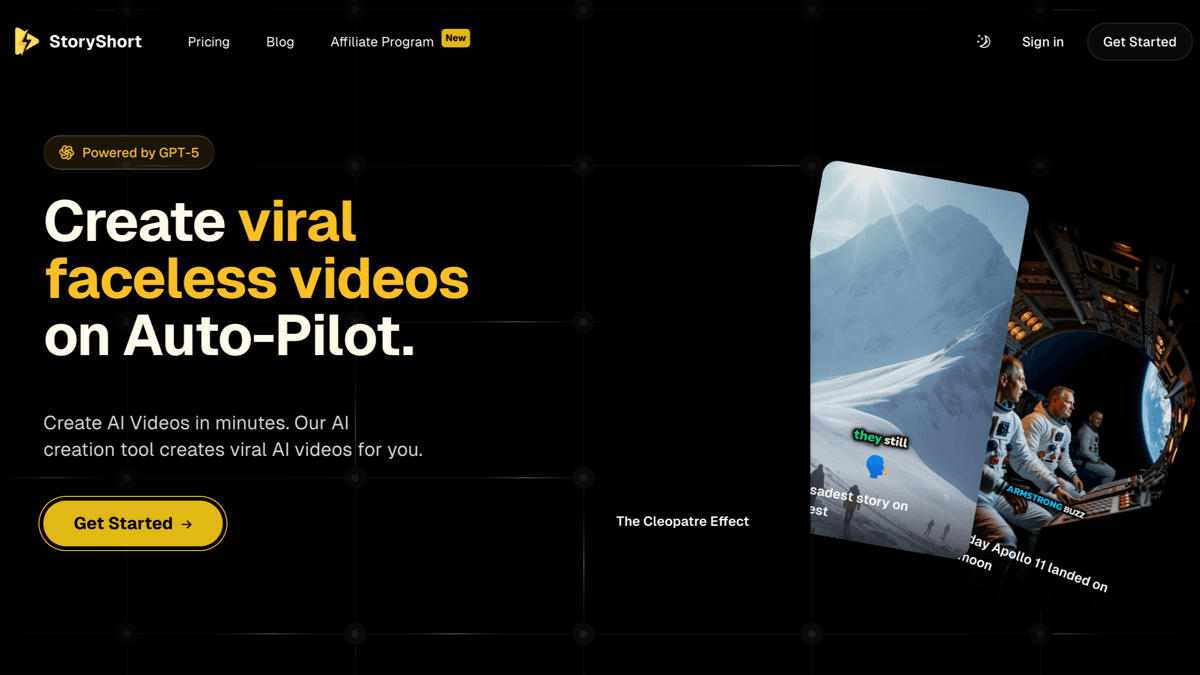
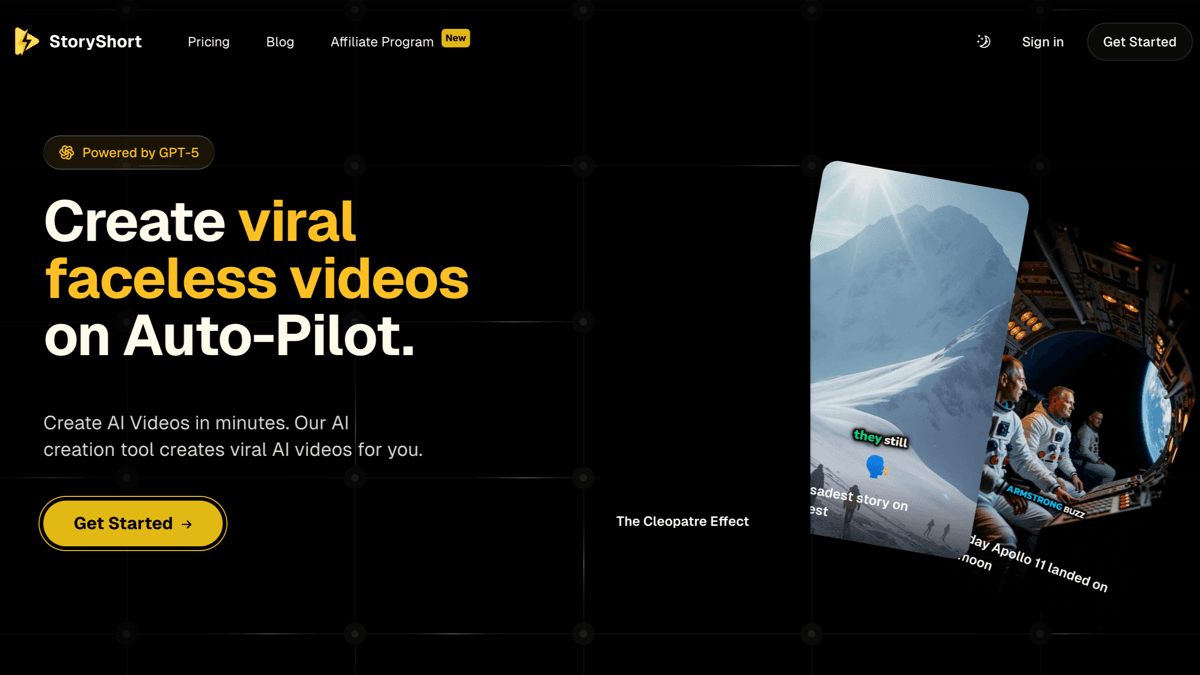
StoryShort is built around faceless video creation from prompts and scripts. Its public faceless video generator page says the product can generate the script, voiceover, visuals, captions, and music from an idea, then export for TikTok, Shorts, or YouTube. It also emphasizes story-heavy niches such as horror, history, true crime, motivation, science, Reddit stories, lists, finance, and gaming lore.
That makes StoryShort easy to understand. It is a story packaging tool. You give it a premise, script, or topic, and the system tries to turn that idea into a narrated visual short.
StoryShort is worth considering if:
- Your channel depends on narrated stories more than product demos or creator commentary.
- You want AI-generated visuals, voiceover, captions, and background music in one flow.
- You publish repeatable formats such as history shorts, scary stories, Reddit stories, facts, or mini explainers.
- You want a tool that is clearly focused on faceless YouTube and TikTok content.
- You are comfortable reviewing AI output before posting, especially for facts, pacing, and tone.
The tradeoff is focus. StoryShort is strongest when the content formula is "topic in, narrated story out." If you want a more flexible system for TikTok drafts, YouTube Shorts, Instagram Reels, image-to-video, scripts, captions, and scheduled publishing, a broader workflow can make more sense.
Where StoryShort Can Feel Limiting
StoryShort's focus is useful, but it may feel narrow when your channel matures. A faceless creator rarely needs only a video generator. The real operating system includes topic research, hooks, scripts, voice consistency, visual style, caption timing, compliance checks, platform-specific edits, scheduling, and post-by-post learning.
Check these points before you commit:
- Platform scope: StoryShort's public pages highlight TikTok, YouTube, Instagram, and autopilot-style publishing. Confirm the exact account connections, export settings, caption behavior, and posting workflow you need.
- Series flexibility: Story-led tools can make it easy to ship one format, but creators often need to test several series, languages, or platform variants before they find a repeatable winner.
- Review requirements: AI can assemble a story quickly, but you still need to check facts, sources, sensitive topics, music, visuals, and captions before publishing.
- Format range: StoryShort is well positioned for story channels. SwipeStory is stronger if you also want educational explainers, promotional shorts, image-to-video concepts, platform-specific generators, and broader short-form workflows.
- Pricing fit: A plan can look affordable or expensive depending on how many finished videos you actually keep after review.
For YouTube specifically, also keep current platform rules in mind. YouTube's Shorts documentation says eligible square or vertical videos up to three minutes can be categorized as Shorts, while Shorts over one minute with active Content ID claims can be blocked globally. That matters for any automated workflow using background music or third-party assets.
StoryShort Pricing Checked May 11, 2026
StoryShort's current public pricing page lists four monthly tiers:
| Plan | Price checked May 11, 2026 | Videos | Series | Credits |
|---|---|---|---|---|
| Starter | $39/month | 40 videos per month | 1 series | 400 credits |
| Growth | $69/month | 120 videos per month | 2 series | 1,200 credits |
| Influencer | $129/month | 240 videos per month | 3 series | 2,400 credits |
| Ultra | $199/month | 500 videos per month | 4 series | 5,000 credits |
The same pricing page lists voiceovers, AI-generated content, background music, no watermark, auto-post videos, downloads, long-form video, and UGC video across the visible tiers.
The pricing is straightforward if you know you want a story-led faceless channel and the output volume lines up with your schedule. The bigger question is whether you need StoryShort's specific story focus or a more general content workflow. If your channel might branch into TikTok explainers, Instagram Reels, image-to-video clips, AI UGC-style drafts, or multiple series, compare workflow depth before comparing only headline price.
StoryShort vs SwipeStory
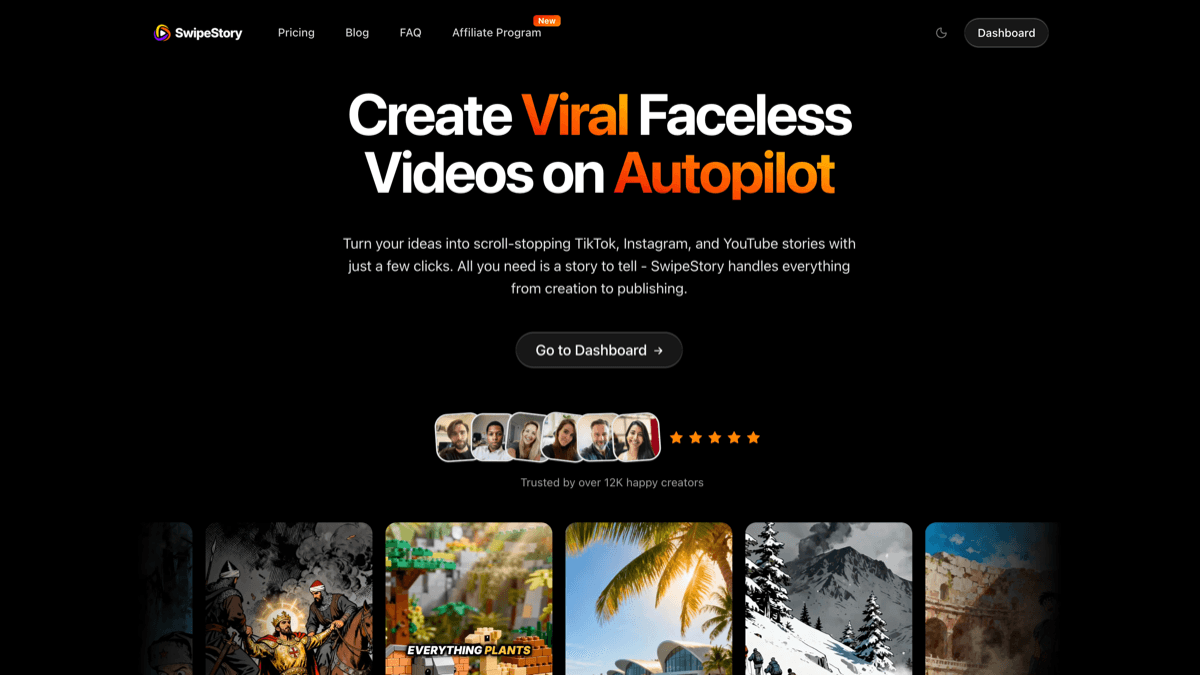
SwipeStory is the stronger StoryShort AI alternative when your bottleneck is the whole production system. It turns prompts or scripts into vertical videos with AI-generated visuals, voiceovers, captions, background music, editing, rendering, and scheduled publishing for TikTok, YouTube Shorts, and Instagram Reels.
On the public pricing page checked May 11, 2026, SwipeStory lists annual sale pricing with Hobby at $16/month for 120 credits and one series, Creator at $31/month for 300 credits and two series, Influencer at $55/month for 600 credits and three series, and Studio at $174/month for 2,000 credits and five series. The same page lists custom AI voiceovers, background music, auto-captions, no watermark, automated posting, art styles, and fast video generation across plans.
The difference is not simply "which tool is cheaper." The difference is workflow shape.
| Question | StoryShort | SwipeStory |
|---|---|---|
| Core job | Story-first faceless video generation | End-to-end short-form video creation and publishing |
| Best user | Story channel creator with a narrow format | Creator testing repeatable formats across TikTok, Shorts, and Reels |
| Inputs | Prompts, topics, and scripts | Prompts, scripts, images, and platform-specific tool flows |
| Output focus | Faceless AI stories, UGC, long-form, niche categories | Faceless shorts, TikToks, Shorts, Reels, image-to-video, and series workflows |
| Best reason to switch | Need broader workflow coverage and lower entry pricing | Need a connected system from idea to scheduled video |
Choose SwipeStory over StoryShort if:
- You want a complete AI short video generator, not only a story packaging workflow.
- You need TikTok, YouTube Shorts, and Instagram Reels in the same production system.
- You want to create story videos, explainers, educational shorts, promotional videos, and image-to-video concepts without switching tools.
- You want built-in series organization and scheduled publishing.
- You care about prompt/script workflow, AI visuals, voiceover, captions, music, rendering, and editing in one connected path.
Choose StoryShort if:
- Your channel is clearly story-led and you like its category presets.
- You want to focus on faceless story videos rather than a broader creator toolkit.
- Its credit and series model matches your posting cadence.
- You prefer its specific interface and output style after testing sample videos.
For many creators, the practical test is simple: generate the same five scripts in both tools. Compare hook quality, narration, visual fit, caption timing, editability, export quality, and how quickly you can schedule the next episode.
Best StoryShort Alternatives To Consider
1. SwipeStory: Best Overall StoryShort AI Alternative
SwipeStory is the first recommendation if you want a faceless story video maker that can also handle broader short-form workflows. It works well for story videos, motivational clips, educational shorts, commentary, niche facts, product explainers, image-to-video concepts, and platform-specific content.
Useful starting points:
- Faceless AI video generator for no-camera story and explainer videos.
- AI YouTube Shorts generator for Shorts-ready scripts, voices, and vertical edits.
- AI TikTok video generator for TikTok-native drafts and fast creative testing.
- AI Reel generator for Instagram-first short-form publishing.
- AI video prompts for Shorts when you need repeatable prompt structures before generation.
The main reason to switch from StoryShort to SwipeStory is optionality. You can still create story-led faceless content, but you are not locked into only that lane.
2. Revid.ai: Best For A Broad AI Video Toolkit
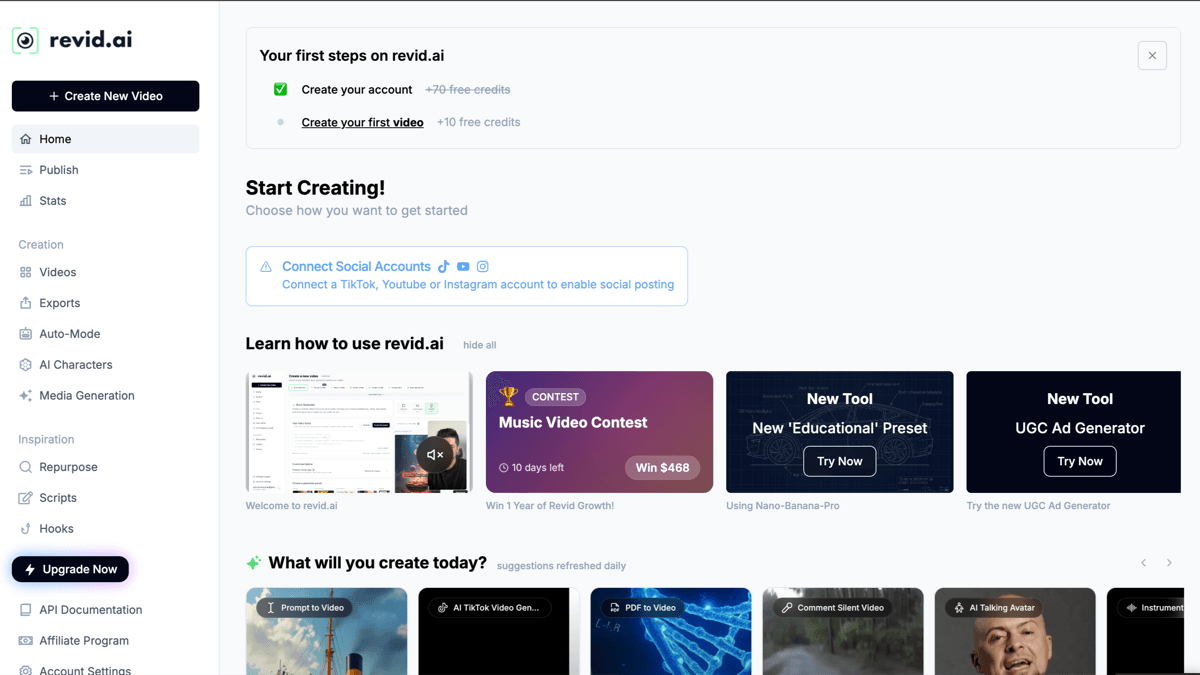
Revid.ai is worth testing if you want breadth. Its public pricing page currently lists Hobby at $39/month, Growth surfaced at $39/month during the checked promo state, Elite at $89/month, and Ultra at $199/month. The Growth tier highlights 100+ AI video tools, text/link/recording inputs, 70+ language voiceovers, hooks, scripts, rewrites, publishing to TikTok, Instagram, and YouTube, API/MCP/CLI access, auto-mode workers, and monthly AI credits.
That is a much wider product surface than StoryShort. Revid can be useful if you want to experiment across many creation modes. The tradeoff is complexity: a bigger toolbox can slow down a creator who only needs a tight daily faceless story workflow.
For a deeper competitor breakdown, see our Revid.ai review and alternatives.
3. AutoShort Or ShortsAuto: Best For Narrow Automation Tests
If your real goal is automatic short-form output rather than story craft, compare StoryShort against tools built around auto-shorts volume or viral-format cloning. AutoShort and ShortsAuto are separate products, and the naming overlap makes this category confusing.
Use this shortcut:
- Choose StoryShort for story-led faceless formats.
- Choose SwipeStory for a broader prompt-or-script-to-published-video system.
- Choose Revid when you want a large AI video toolbox.
- Choose an auto-shorts tool when you want one narrow automated channel format.
- Choose a clipping tool when you already have long videos and need short highlights.
Our AutoShort alternative and ShortsAuto alternative guides break down those adjacent workflows.
A Better SwipeStory Workflow If You Are Switching
Here is a practical workflow for creators replacing StoryShort with SwipeStory:
- Pick one repeatable series premise, such as "daily strange history stories," "one-minute science myths," or "short founder lessons."
- Draft five hooks with a clear payoff, then choose the strongest one.
- Turn the hook into a 90- to 140-word script with one idea per scene.
- Generate the faceless video in SwipeStory with a consistent voice and visual style.
- Review captions, pacing, music, sources, and the final claim before publishing.
- Schedule the video and keep the same format for at least five episodes before judging.
- Track hook angle, topic, retention notes, comments, and next prompt improvements.
The point is not to automate judgment away. The best AI video workflow removes repetitive editing work so you can spend more energy on topic quality, story structure, source review, and audience learning.
Final Recommendation
SwipeStory is the best StoryShort AI alternative if you want original faceless short-form videos, flexible series planning, and scheduled publishing across TikTok, YouTube Shorts, and Instagram Reels. StoryShort remains a good option for creators who are committed to story-first faceless formats and like its output style, pricing model, and category presets.
If you are deciding today, run one test prompt in StoryShort and one in SwipeStory's faceless AI video generator. Judge the finished videos by story clarity, voice, caption timing, visual fit, editability, platform readiness, and how easily you can schedule the next episode. That will tell you more than a feature table.
Frequently Asked Questions
What is the best StoryShort AI alternative?
SwipeStory is the best StoryShort AI alternative for creators who want prompt-to-video or script-to-video faceless shorts with AI visuals, voiceover, captions, music, rendering, series automation, and scheduled publishing across TikTok, YouTube Shorts, and Instagram Reels.
Is StoryShort better than SwipeStory?
StoryShort can be better if your channel is narrowly focused on story-led faceless videos and you prefer its presets. SwipeStory is better if you want a broader AI short video workflow with more platform coverage and series flexibility.
Can SwipeStory make faceless story videos?
Yes. SwipeStory can turn prompts or scripts into faceless videos with AI-generated visuals, voiceovers, captions, background music, editing, rendering, and publishing workflows. It is useful for stories, explainers, facts, motivation, education, and niche series.
Should I use StoryShort for YouTube Shorts?
StoryShort can be a fit for YouTube Shorts if your content is story-led. Before relying on any automated workflow, check export length, aspect ratio, music usage, Content ID risk, captions, and account publishing details.
