How Short-Form Video Drives Engagement in 2026

Stella writes SwipeStory guides about AI faceless video creation, short-form video strategy, creator tools, and automated publishing workflows.
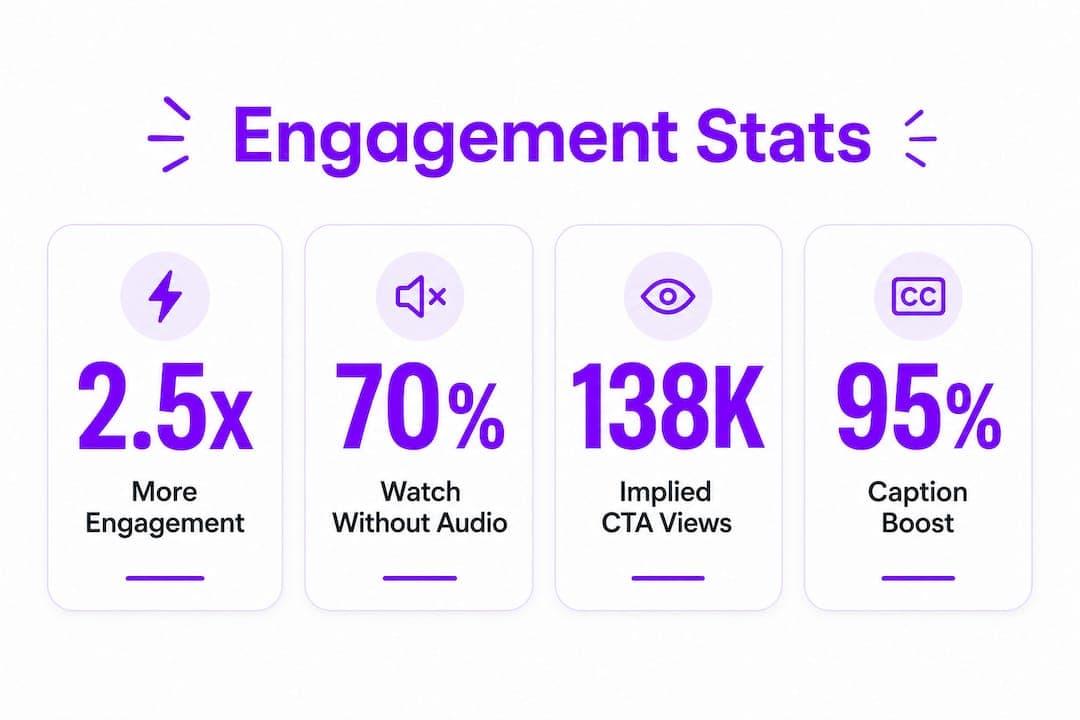
Short-form video is the most effective content format for driving audience engagement on social media, generating 2.5x more engagement than long-form content across every major platform. That gap exists because human attention spans now average 8.25 seconds, and short-form video is the only format built around that constraint rather than fighting it. Understanding how short-form video drives engagement means understanding three things: psychology, platform mechanics, and production discipline. Get all three right, and the algorithm works for you. Miss any one of them, and your content disappears into the feed.
How short-form video drives engagement through psychology
The brain decides whether to keep watching within the first three seconds. That is not a metaphor. It is the biological reality behind every swipe decision a viewer makes. Short-form video wins because it delivers an emotional or informational payoff before the brain has time to disengage.
Emotional triggers are the single biggest driver of video performance. Research analyzing 4,000 TikTok and Instagram videos found that Fear outperforms Hope by a 49x difference in average views. That gap is not about being negative. It is about urgency. Fear creates a physiological response that makes viewers feel they cannot afford to look away.
"Platform-specific hacks like timing and trend riding are only the last 10% of performance. The majority depends on emotionally relatable content that makes viewers sync their brain activity with creators."
Empathy and Outrage perform similarly well. When a viewer feels what the creator feels, their brain literally mirrors the emotional state on screen. That synchronization is what converts passive watching into sharing, commenting, and saving.
Implied calls to action (CTAs) outperform direct CTAs by a wide margin. Implied CTAs generate approximately 138,000 views on average, compared to 72,000 for direct CTAs. The reason is simple: telling someone to "comment below" feels transactional. Ending a video on an unresolved tension or a provocative question makes commenting feel natural.

How do platform algorithms prioritize short-form video?
Algorithms do not reward content that people like. They reward content that people watch. Watch time is the single most important metric for algorithm success in 2026. A video with strong completion rates accumulates more total watch time than a shorter clip with drop-offs, even if the shorter clip gets more likes.
The 3-second hold rate is the first filter every video must pass. Videos with a hold rate above 65% at the 3-second mark receive 4–7 times more impressions than those that fall below it. That means your opening frame is not just a hook. It is a gatekeeper.
Platform behavior varies significantly, and creators who ignore those differences leave reach on the table.
- TikTok distributes content to a small follower sample first, then expands reach based on engagement signals from that group.
- Instagram Reels prioritizes non-follower discovery, meaning a strong video can reach entirely new audiences regardless of your follower count.
- YouTube Shorts rewards watch time accumulation, so videos 40 seconds or longer with genuine value see 33% higher engagement than the shortest clips.
| Platform | Primary algorithm signal | Discovery model |
|---|---|---|
| TikTok | Completion rate | Follower-first, then expand |
| Instagram Reels | Saves and shares | Non-follower discovery |
| YouTube Shorts | Total watch time | Search and browse |
Adding captions is one of the highest-leverage moves a creator can make. Over 70% of viewers watch videos without audio, and captions deliver a 95% lift in engagement. Swipestory's AI caption generator automates this step so creators do not have to choose between speed and accessibility.
Pro Tip: Test your 3-second hold rate before optimizing anything else. If fewer than 65% of viewers stay past the third second, no amount of editing in the middle of the video will save your reach.
What are the best practices for short videos that boost engagement?
The AIDA framework (Attention, Interest, Desire, Action) is the most reliable structure for short-form video. Adapted for video under 60 seconds, it means your hook must land in the first second, your core value must arrive by second 10, and your implied CTA must close the loop without ever sounding like a sales pitch.
Dead air kills videos. Attention resets every 5–8 seconds through angle cuts, text overlays, or audio shifts. Every time the visual or auditory pattern changes, the brain re-engages. Creators who understand this treat their editing timeline like a series of micro-hooks, not a single narrative arc.
The best short-form video hooks combine three layers simultaneously:
- Motion: Something moves in the first frame, whether a person, text, or graphic.
- Text: A bold on-screen statement that works even without audio.
- Audio: A hook line spoken in the first second that creates curiosity or tension.
Layering all three produces a measurable lift in viewer retention compared to relying on any single element alone.
Video length is a variable, not a constant. Start around 20–30 seconds and extend only when your retention data supports it. Padding a thin idea to hit a longer runtime is the fastest way to tank your completion rate. TikTok's algorithm currently favors 11–18 second clips for discovery, while YouTube Shorts rewards longer videos that hold attention.
Pro Tip: Use the Hook-Body-CTA framework as your script template. Write the hook last. Once you know what your video delivers, you can write a hook that promises exactly that, and nothing more.
The difference between implied and direct CTAs deserves more attention than most creators give it. A direct CTA ("Follow me for more tips") signals to the algorithm that you are asking for engagement rather than earning it. An implied CTA ends the video on an open loop: a question, a surprising claim, or an unresolved tension that makes commenting feel like the viewer's own idea.
How can marketers integrate short-form video into their content strategy?
Short-form video is a top-of-funnel tool. It attracts and nurtures rather than converts directly. Marketers who treat short-form video as a direct sales channel consistently underperform those who use it to build awareness and trust first.
A practical content mix for short-form video looks like this:
- 40% attract: Broad, emotionally resonant content designed to reach new audiences. Think hot takes, surprising facts, and relatable scenarios.
- 40% nurture: Content that deepens the relationship with existing followers. Tutorials, behind-the-scenes clips, and value-dense explainers belong here.
- 20% convert: Direct product mentions, testimonials, or offers. Keep this minority. Audiences tolerate conversion content when it is outnumbered by genuine value.
Short-form video also functions as a traffic driver. A 30-second clip can tease a newsletter, a long-form YouTube video, or a product page without ever feeling like an ad. The key is to deliver enough value in the short clip that viewers feel compelled to seek out more. Video content earns 1,200% more shares than text and images combined, which means each short clip has compounding reach potential.
Repurposing is one of the most underused short video marketing tactics. A 20-minute podcast episode contains at least five short-form video moments. A blog post with a strong data point becomes a 15-second clip. A customer testimonial becomes a 30-second social proof video. Creators who build repurposing into their workflow produce more content with less effort, and their social video campaigns maintain consistency without burning out.
Pro Tip: Map every short-form video to a specific funnel stage before you shoot it. Attract content should never include a product mention. Nurture content should never feel like a cold pitch. Mixing stages in a single video confuses both the viewer and the algorithm.
Key Takeaways
Short-form video drives engagement by combining emotional triggers, rapid pacing, and platform-specific algorithm signals to outperform every other content format on social media.
| Point | Details |
|---|---|
| Emotional triggers dominate | Fear and Outrage drive far more views than Hope; build hooks around urgency, not aspiration. |
| The 3-second hold rate is critical | Videos above 65% hold rate at 3 seconds receive 4–7 times more impressions from the algorithm. |
| Captions are non-negotiable | Over 70% of viewers watch without audio; captions deliver a 95% lift in engagement. |
| Implied CTAs outperform direct asks | Implied CTAs average nearly double the views of explicit calls to action. |
| Short-form video belongs at the top of the funnel | Use it to attract and nurture first; reserve conversion content for 20% of your output. |
What I've learned about short-form video that most creators get wrong
Most creators obsess over the algorithm. They chase trending sounds, post at peak hours, and study platform updates like they are reading scripture. I understand the impulse. But after watching thousands of videos perform and fail, I am convinced that emotional engineering matters far more than any platform hack.
The creators who consistently win are not the ones who post the most. They are the ones who make viewers feel something specific and fast. Fear, curiosity, and Outrage are not manipulation tactics. They are honest emotional signals that tell the brain "this matters." When your content triggers that response, sharing becomes instinctive.
The other mistake I see constantly is treating short-form video as a finished product. It is not. Every video is a data point. Your retention curve tells you exactly where viewers lost interest. Your hold rate tells you whether your hook is working. Creators who review this data after every post and adjust their next video accordingly improve faster than anyone who relies on intuition alone.
Authenticity is real, but it is misunderstood. Authenticity does not mean low production quality. It means the emotional register of the video matches the creator's actual perspective. Polished videos that feel genuine outperform raw videos that feel performed. The camera picks up inauthenticity the same way a microphone picks up background noise. Fix the signal, not just the surface.
— Jesse
Create short-form videos that actually perform
Knowing the theory behind short-form video engagement is one thing. Executing it consistently is another. Swipestory's AI video generator handles the production workflow from script to finished video, so creators can focus on the emotional hook and let the platform handle rendering, voiceovers, and captions.
Swipestory has already powered over 60,000 short videos for creators across TikTok, Instagram, and YouTube. The platform includes platform-specific templates, customizable captions, and pacing presets built around the engagement principles covered here. Whether you are producing educational clips or motivational shorts, the short video maker gives you a production-ready output in minutes, not hours.
FAQ
What makes short-form video more engaging than long-form?
Short-form videos under 60 seconds generate 2.5x more engagement than long-form content because they match the average human attention span of 8.25 seconds and deliver value before viewers disengage.
How long should a short-form video be for maximum engagement?
Start at 20–30 seconds and extend only when retention data supports it. TikTok favors 11–18 second clips for discovery, while YouTube Shorts rewards videos 40 seconds or longer that maintain strong completion rates.
Why do implied CTAs outperform direct calls to action?
Implied CTAs generate approximately 138,000 average views compared to 72,000 for direct CTAs because they make viewer interaction feel natural rather than transactional, which also signals genuine engagement to the algorithm.
Do captions really affect video performance?
Adding captions delivers a 95% lift in engagement and raises completion rates significantly, since over 70% of viewers watch videos without audio on mobile devices.
What emotional triggers work best in short-form video?
Fear, Empathy, and Outrage consistently outperform Hope and Aspiration. Content using Fear as a trigger shows a 49x difference in average views compared to Hope-based content, making urgency the most reliable emotional driver.
